
Last updated August 25, 2026
Free on-site gate assessment - hinges, posts, and your LiftMaster or Nice gate operator checked before anything is quoted
The assessment is free and the quote is the invoice.

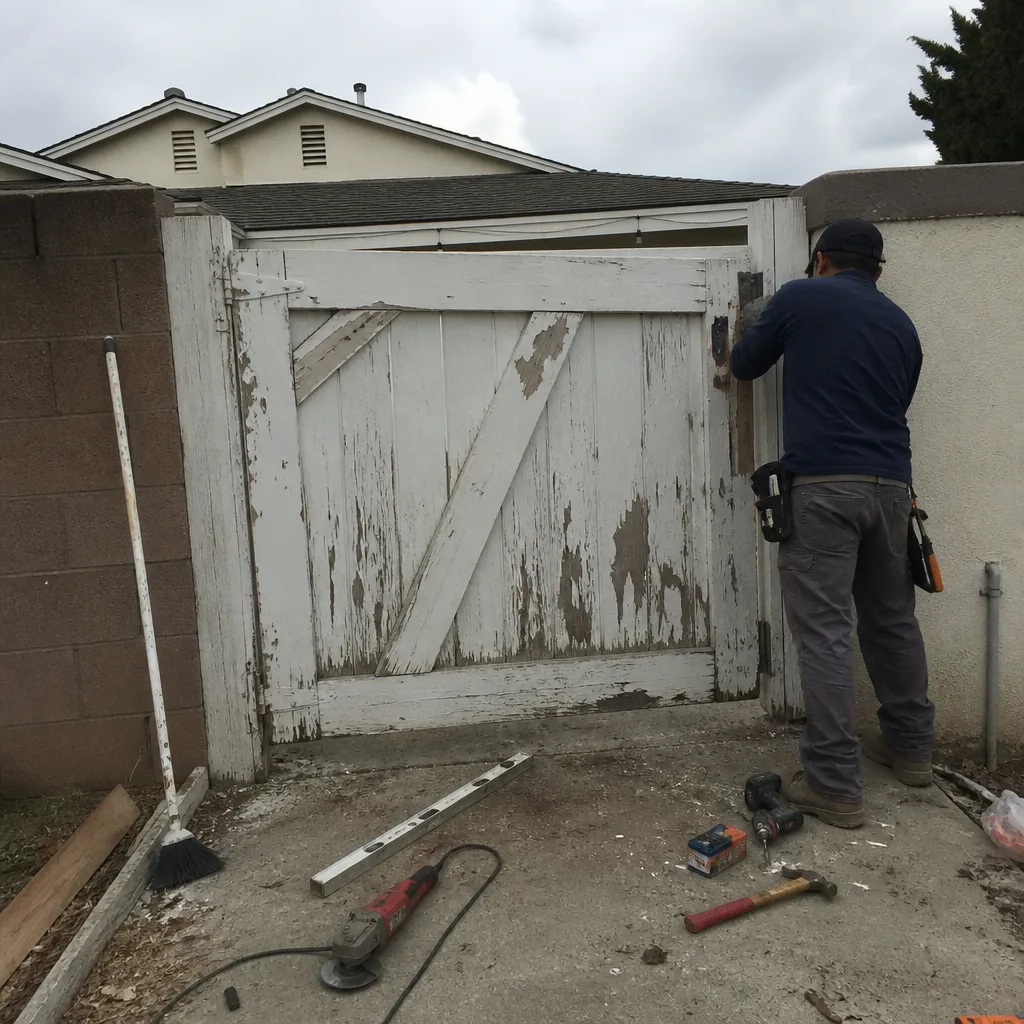 Before
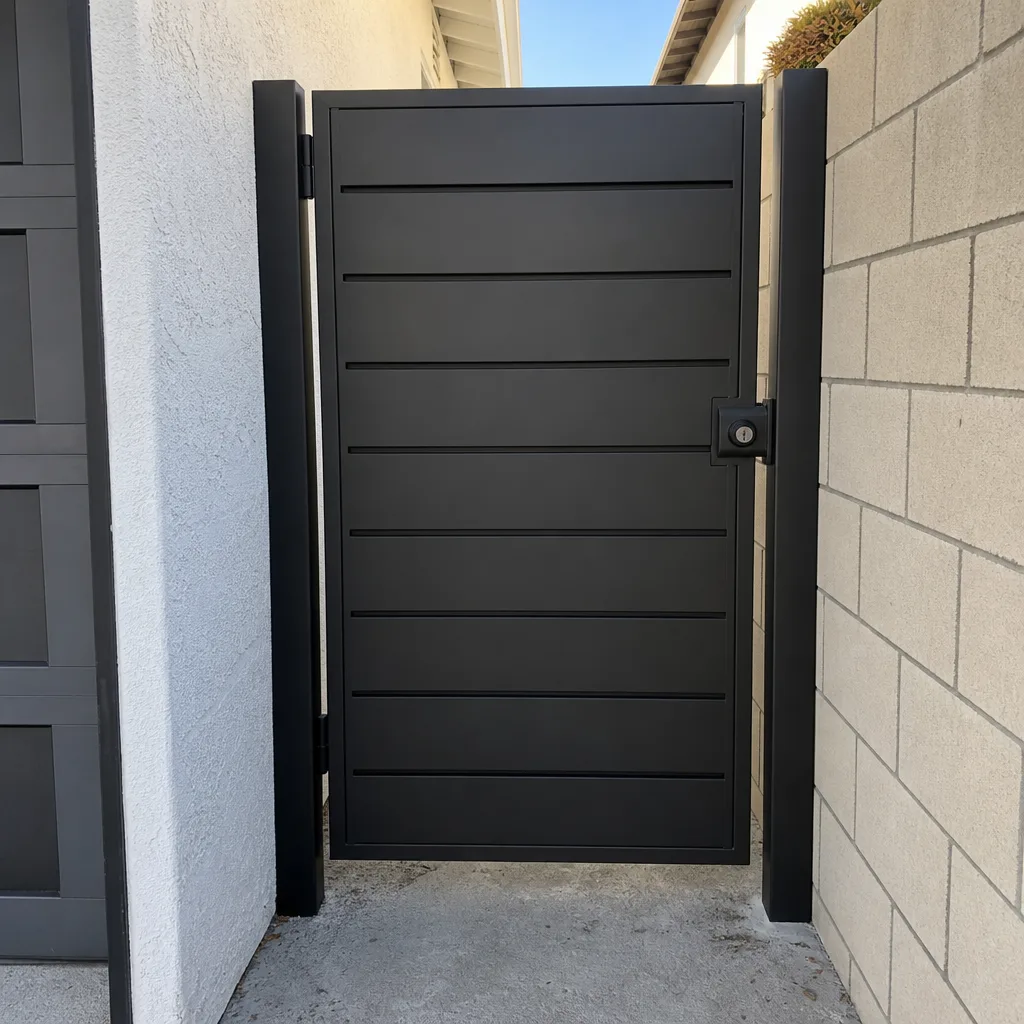 After
After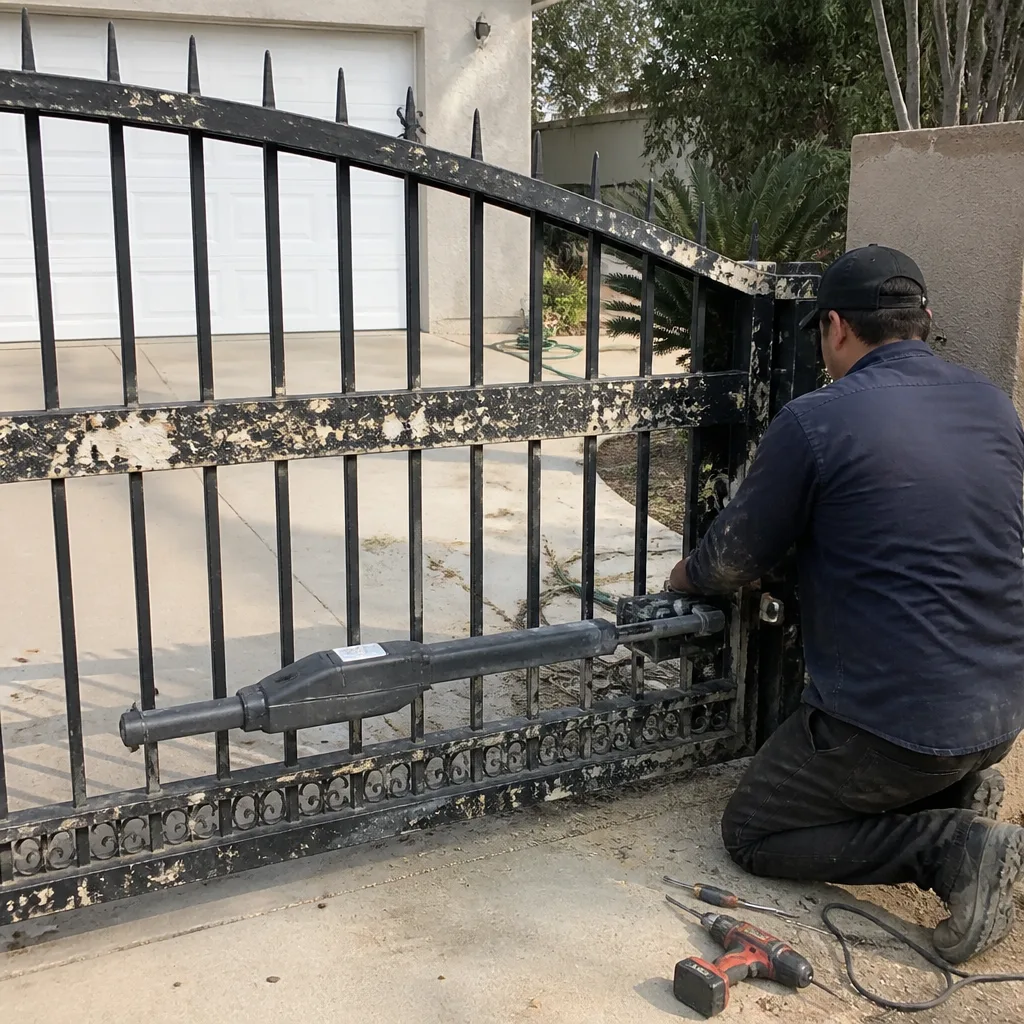 Before
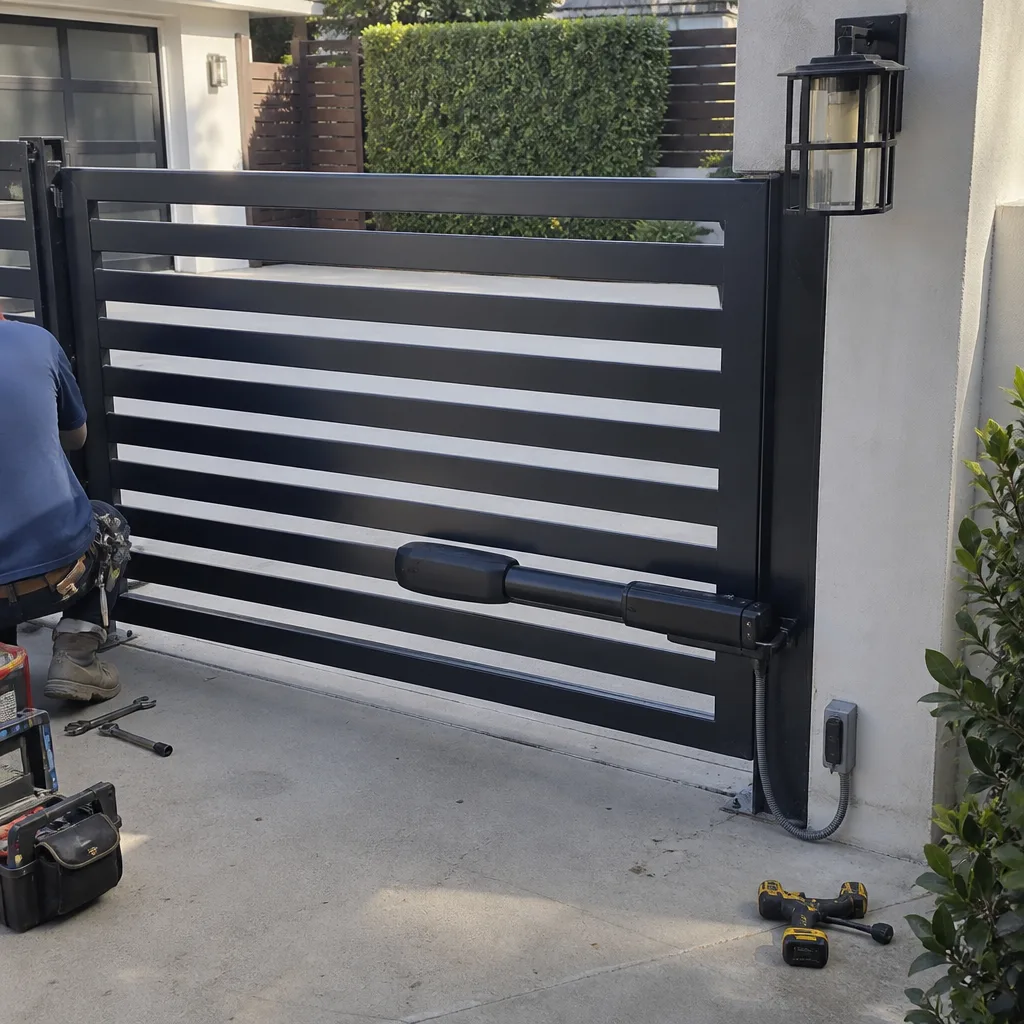 After
After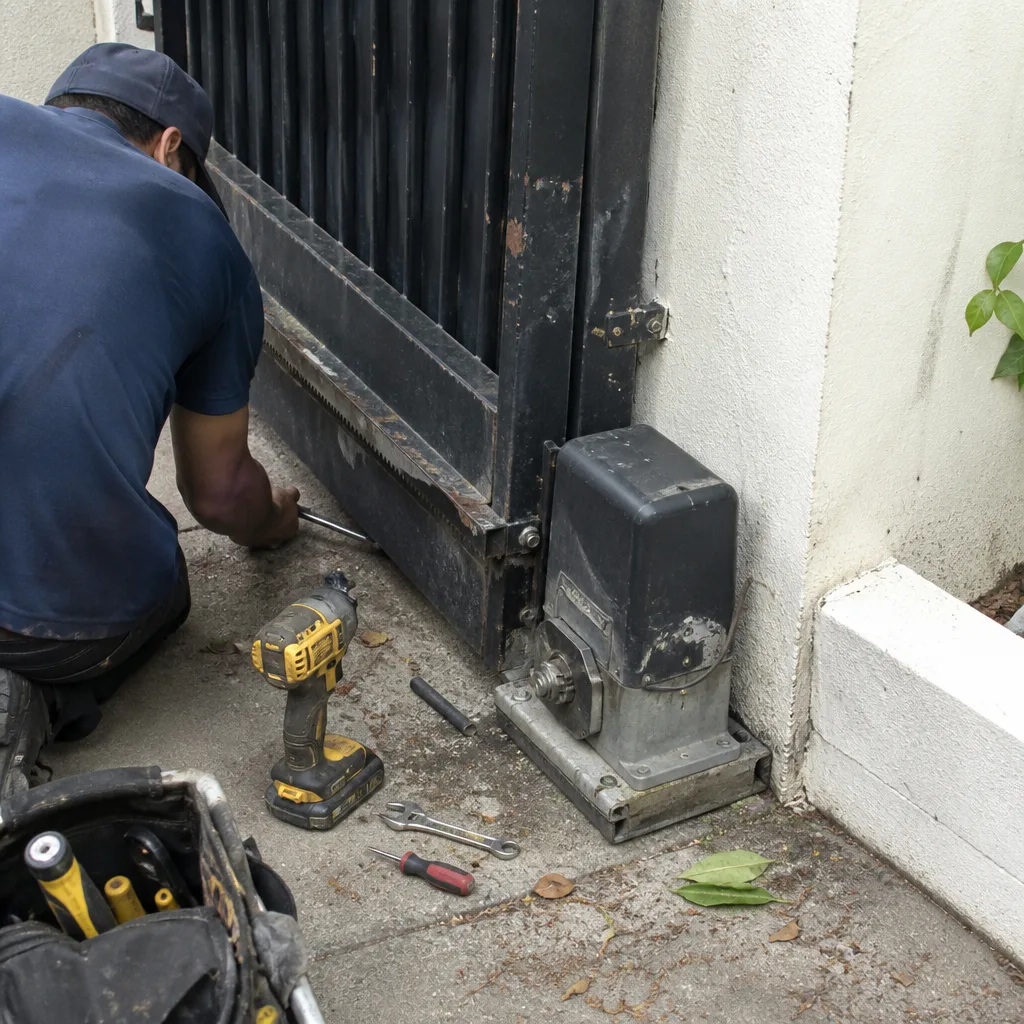 Before
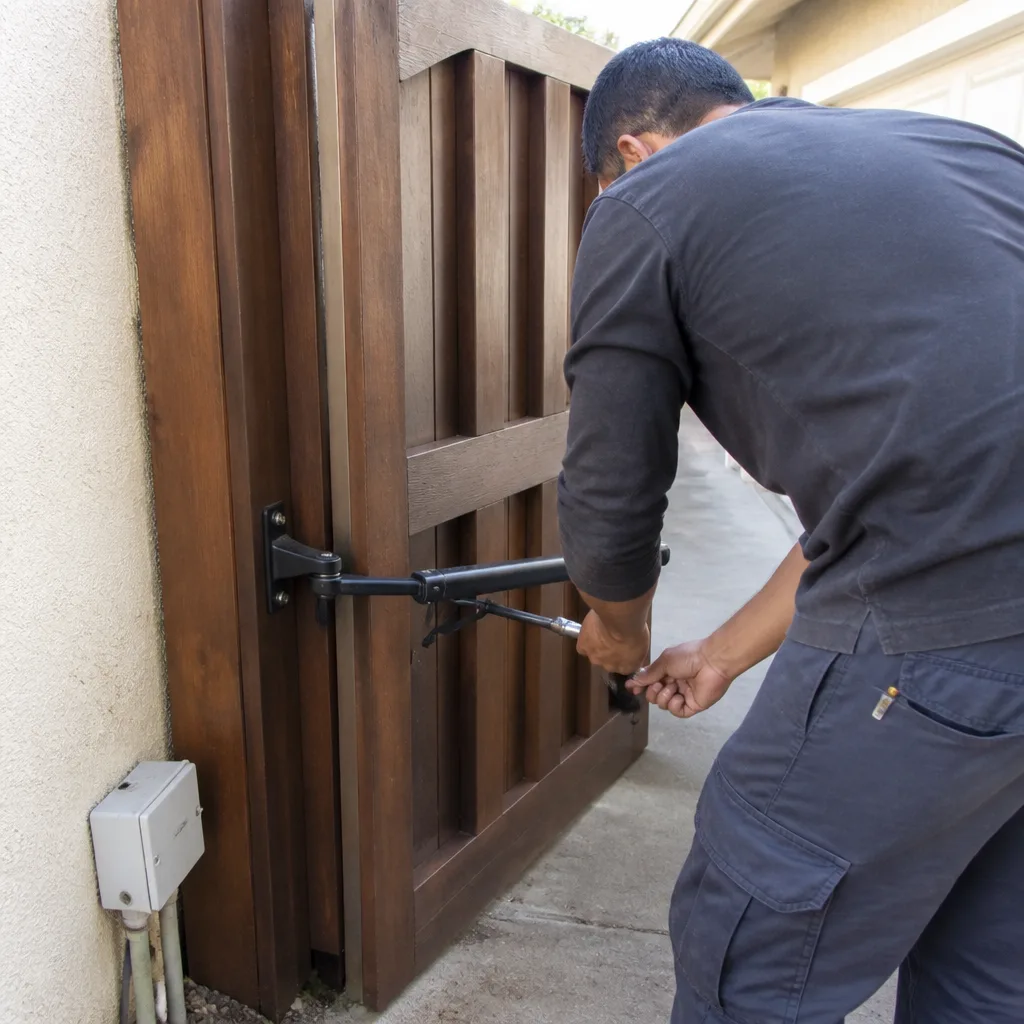 After
AfterSeasonal Gate Repair Care for Costa Mesa: Year-Round Homeowner’s Guide
Most homeowners in Costa Mesa assume a driveway gate fails suddenly. In our experience, it does not. Gates fail on a schedule, and that schedule follows the seasons. The salty marine layer that rolls up the Costa Mesa plain every evening does more to a gate hinge than ten years of daily use. This guide explains what actually happens to your gate month by month, what to watch for, and what to address before a small problem becomes a gate that will not open at 6:30 on a Monday morning.
Quick Answer
Seasonal gate care in Costa Mesa means protecting steel and electronics from salt air, sun exposure, and the occasional winter downpour. A homeowner should inspect hinges, tracks, and opener components at the start of summer and again in late fall, lubricate moving parts twice a year, and call a gate specialist when a gate moves slower than it did last month. Most Costa Mesa gate failures trace back to corrosion or UV damage that was left alone for one season too long.
Table of Contents
- Why Costa Mesa Weather Demands a Different Gate Routine
- Spring: The Salt and Pollen Season
- Summer: Heat, Sun, and Sluggish Operators
- Fall: The Most Important Maintenance Window
- Winter: Rain, Rust, and Power Surges
- The Twice-a-Year Maintenance Checklist
- Opener and Motor Care Through the Seasons
- Common Mistakes to Avoid
- When to Call a Professional
- Frequently Asked Questions
- The Bottom Line
Why Costa Mesa Weather Demands a Different Gate Routine
Costa Mesa sits close enough to the Pacific that evening marine layers are a fact of life, especially from May through July and again in late autumn. That moist salt air settles on everything. For a steel or iron driveway gate, it means a thin film of salt water condenses on the metal most nights of the year. When morning sun burns that moisture off, the salt remains. Left alone, the salt works its way into pivot joints, hinge barrels, and any place two pieces of metal touch.
Homeowners in the Mesa Verde and College Park neighborhoods see this more than most. Homes there sit on slightly higher ground, but still within the marine influence. What surprises people is that gates more than a mile inland from the coast - in neighborhoods like Hall of Fame or parts of Westside Costa Mesa - corrode nearly as fast. The marine layer travels further than people expect.
UV exposure is the second Costa Mesa-specific factor. Southern California sunlight is intense, and it does not take summers off. Powder-coated gates fade and chalk. Vinyl trim on older gate operators becomes brittle. Rubber weather seals crack. The combination of nighttime salt and daytime UV is not found in many places, but Costa Mesa has it almost every day of the year.
The result is a maintenance calendar that does not look like the one a homeowner in Arizona or Colorado would follow. In Costa Mesa, you are not fighting snow or road salt. You are fighting salt air and sun. Both are quieter, slower, and easier to ignore - and both will take a gate down faster than a cold winter.
Spring: The Salt and Pollen Season
Spring in Costa Mesa is the season when the marine layer lingers longest. May Gray and June Gloom are real. Morning fog can hang around until noon, which extends the nightly salt condensation period by several hours. A gate that was fine in February can start showing surface rust spots by late April.
What to watch for in spring:
- Surface rust at weld joints. Weld points are the most vulnerable spots on any steel gate. The heat of welding changes the metal’s grain structure, and that area corrodes first. Look closely at the bottom corners of the gate frame and where pickets meet the horizontal rails.
- Pollen buildup in the track. Costa Mesa’s mature tree canopy - jacarandas, eucalyptus, and pepper trees - produces dense pollen in spring. For sliding gates on V-track or cantilever systems, that pollen mixes with dew into a paste that clogs rollers and makes the gate drag.
- Stiff hinges. If a swing gate groans or moves unevenly in March or April, the hinge grease has broken down and the salt air has started etching the pin. Addressing it in spring prevents a seized hinge by August.
A simple spring routine takes about 30 minutes. Wipe down hinge and roller areas with a dry rag. Inspect for rust blooms. Run the gate open and closed three times while standing beside it, listening for changes in sound. A gate that creaks now will not heal itself. In our experience, spring is when Costa Mesa homeowners catch about half of all problems before they become repair calls.
Summer: Heat, Sun, and Sluggish Operators
Costa Mesa summers are mild compared to inland Orange County, but the direct sun on a south-facing gate still pushes metal temperatures well past 130 degrees. That heat does two things: it expands the steel, which tightens clearances, and it strains gate opener motors that have been quietly degrading all year.
The most common summer complaint is a gate that moves slower than it used to. Heat increases electrical resistance in motor windings and control boards. If a capacitor in the opener is already weak, a 90-degree afternoon can expose it. Sliding gates in Costa Mesa get the worst of this because their motors work against more friction on hot days, as the track itself expands and shifts.
Summer checklist for Costa Mesa homeowners:
- Test the gate at 3 p.m. on a hot afternoon. Morning tests do not tell you much. A gate that struggles in afternoon heat is telling you the motor is working too hard.
- Check safety sensors and photo eyes. Summer dust, especially near Fairview Park or Talbert Regional Park, settles on sensor lenses. A quick wipe with a dry cloth restores function.
- Listen for a change in motor pitch. A motor that sounds higher-pitched in the afternoon than in the morning is a motor approaching the end of its service life.
- Inspect the gate’s shade situation. If your gate opener sits in full afternoon sun, consider whether a simple sun shield would extend its life. Many Costa Mesa homes have open driveways with no shade at all.
For operators from brands like DoorKing or Elite, summer heat is the season when older control boards tend to fail. These boards are designed for outdoor service, but nothing lasts forever in full Southern California sun. The good news is that board-level diagnosis is usually quick, and the fix is straightforward - provided the technician knows the brand. A generalist may swap parts until the problem disappears. A specialist knows what to test first.
Fall: The Most Important Maintenance Window
If a Costa Mesa homeowner does one maintenance task per year, it should be the fall inspection. October and November bring the first significant temperature swings of the year, and temperature swings are what expose structural problems. Steel contracts in cooler air. A hairline crack that was invisible in August opens up in November.
Fall is also when the marine layer returns after a late-summer break. The combination of cooler nights and returning moisture is hard on unprotected metal.
The fall inspection should cover:
- All four hinge points on swing gates. Move the gate by hand while it is disengaged from the opener. Feel for vertical play - any up-and-down movement at the latch end of the gate. More than a quarter inch of play means hinge bearings are wearing.
- Track alignment on sliding gates. Run the gate slowly and watch the rollers. If the gate wiggles side to side or the wheels lift off the track at any point, the track has shifted.
- Welded joints, top to bottom. Use a flashlight. Cracks in powder coating or paint at a joint often mean the weld underneath is moving. This is the earliest warning sign.
- Standoff posts and receiver posts. These anchor the gate. If a post has moved, the gate will never close properly, no matter how many times you adjust the opener limits.
Addressing what you find in October costs less than addressing what breaks in February. A hinge replacement in the fall is a one-hour job at a scheduled time of your choosing. A hinge that fails in winter becomes an emergency call, a gate that will not close, and a security problem at the worst moment.
Winter: Rain, Rust, and Power Surges
Winter in Costa Mesa does not mean freezing temperatures, but it does mean rain - and rain changes things for any gate. The first real storm of the season is when many homeowners discover their gate’s drainage is not what they thought it was. Water pools at the base of posts. Track channels fill with silt. Underground conduit boxes for gate opener wiring collect water.
The single most common winter repair call we see in Costa Mesa is a gate opener that trips its GFCI or breaker during or after a storm. The fix is usually straightforward: drain the conduit box, dry the connections, and reseal. But the call almost always comes at night, when the storm is worst and the homeowner needs the gate to work.
Winter-specific guidance:
- Check the drain holes at the base of gate posts. Many older Costa Mesa gates were installed without weep holes. Water sits inside the post and rusts it from the inside out. If your posts have no visible drain holes, a rust-through is a matter of when, not if.
- Seal any exposed wiring. Gate opener control wires should not be visible. If you see wire insulation cracking or bare copper anywhere near the ground, call before the next storm.
- Run the gate after the first real rain. A gate that operates fine dry may bind when the ground swells with moisture. Test it within 24 hours of the season’s first significant rainfall.
- Watch for corroded battery terminals in backup systems. Many Costa Mesa gates have battery backup for power outages. Salt air attacks battery terminals year-round, but wet weather accelerates it.
Winter is also when Ghost Controls and Mighty Mule operators on residential gates tend to act up. These are popular retrofit brands, and many were installed years ago without enough attention to weatherproofing the control box. A little moisture inside the housing creates intermittent faults that are maddening to diagnose - the gate works, then it does not, then it works again. The pattern repeats until someone opens the box and finds the corrosion.
The Twice-a-Year Maintenance Checklist
Every gate needs a documented routine, and the best routine in Costa Mesa follows the seasons: once in late spring and once in late fall. Here is a step-by-step guide a homeowner can follow, or hand to a technician so everyone is working from the same list.
Step 1: Visual Inspection (15 minutes)
- Walk the full perimeter of the gate, both sides.
- Inspect all weld joints, hinge barrels, and pinch points with a flashlight.
- Look for rust blooms, cracked paint, or powder coat bubbling.
- Check the ground at the base of each post for signs of water pooling.
- Observe the gate in motion from the side, not the front.
Step 2: Mechanical Check (10 minutes)
- Disengage the opener using the manual release.
- Move the gate through its full travel by hand.
- Note any resistance, dragging, or uneven movement.
- For swing gates, check for vertical play at the latch end.
- For sliding gates, check roller contact and track smoothness.
Step 3: Lubrication (10 minutes)
- Hinge pins on swing gates: light machine oil, not grease. Grease attracts salt and grit.
- Roller bearings on sliding gates: dry lubricant or a light oil designed for outdoor use.
- Chain drives on some openers: use the manufacturer’s recommended product. Nothing else.
- Do not lubricate the photo eye lenses. Wipe them clean with a dry cloth.
Step 4: Electrical and Safety (10 minutes)
- Check that safety sensors are aligned and lenses are clean.
- Test the auto-reverse mechanism with a solid object, not a hand.
- Check the opener housing for water entry signs or corroded screws.
- Confirm battery backup is holding charge, if equipped.
This routine takes less than an hour twice a year. It will not catch every possible failure, but it will catch the majority, and it will teach you what your gate looks and sounds like when it is healthy - which makes it easier to spot when it is not.
Opener and Motor Care Through the Seasons
The mechanical gate gets most of the attention, but the opener is doing the actual work. In Costa Mesa, openers face three specific enemies: salt moisture in the control board, heat stress on capacitors and transformers, and ant intrusion. Yes, ants. Argentine ants are endemic to Orange County, and they love the warmth inside a gate operator housing. We have opened more than a few control boxes to find an ant colony that shorted a board.
Different opener types need different seasonal care:
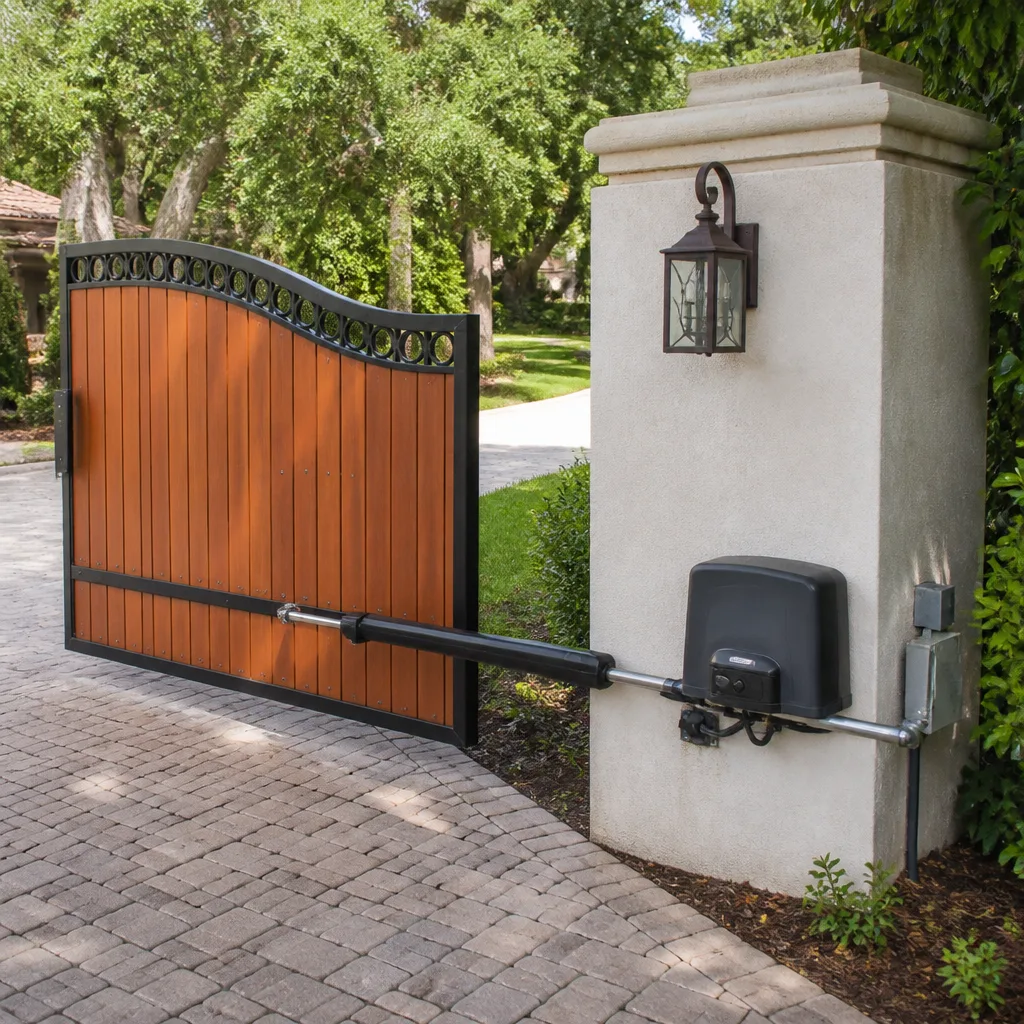
- Linear arm operators - common on residential swing gates. The arm joints need grease once a year, but only a small amount. Too much grease attracts grit.
- Sliding gate operators with chain drives - inspect chain tension each fall. A loose chain slaps and wears sprockets. A tight chain loads the motor bearings.
- Hydraulic operators - found mostly on larger estate gates in Costa Mesa’s upper hillside neighborhoods. Hydraulic fluid degrades with heat. A fluid check before summer is worth doing.
- Solar-powered operators - becoming more common. In Costa Mesa, morning fog reduces panel output for part of the year. Tree canopy and panel angle matter more than most installers admit.
Whatever the brand - and we service several, including DoorKing, Elite, and Mighty Mule - the seasonal rule is the same. An opener that receives a quick inspection in spring and fall will typically outlast one that never gets touched until it fails. The difference is often three to five years of additional service life, which on a $1,500 to $3,500 opener is real money.
Power quality is worth mentioning. Costa Mesa’s older neighborhoods - including parts of Eastside Costa Mesa - have overhead utility lines that predate current standards. Voltage sag and brief outages are common during Santa Ana wind events. A whole-home surge protector will not save a gate opener the way a dedicated surge device at the opener location will, but every layer helps. When we install a new opener in Costa Mesa, surge protection is part of the standard recommendation.
Common Mistakes to Avoid
- Ignoring a gate that is “a little slow.” A gate that moves slower than it did six months ago is not being lazy. Something is creating additional resistance or the motor is losing torque. The problem compounds with every cycle, and the eventual failure is rarely convenient. In Costa Mesa, a slow gate in August becomes a dead gate by February.
- Using WD-40 on gate hinges. WD-40 is a water displacer, not a lubricant. It will quiet a squeak for a week, then the salt air will have something fresh to attack. Use the right product for the job or have a professional do it.
- Power-washing the gate without protecting the opener. A power washer forces water past seals and into control boards. If you must wash the gate, cover the opener, keep the wand away from hinge points, and run the gate dry within an hour.
- Adjusting the opener limits instead of fixing the mechanical problem. When a swing gate sags, the latch no longer lines up. Many homeowners solve this by adjusting the opener travel limits, which works for a while, then the sag gets worse, and the opener is pulling against a bind it was never designed to handle. Fix the gate, not the electronics.
- Waiting to replace a rusted hinge pin. Hinge pins are one of the least expensive parts on a gate - usually under $40 installed. But a worn pin accelerates wear on the hinge barrel itself, and once the barrel is egged out, the hinge must be cut off and welded back on. A $40 repair becomes a $400 repair by waiting a season.
- Skipping the fall inspection because “nothing seems wrong.” The entire purpose of the fall inspection is to find problems before they announce themselves. By the time a problem is obvious to the naked eye, it is already a repair rather than a maintenance item.
When to Call a Professional
A homeowner can handle a visual inspection, a lens cleaning, and a basic lubrication. But certain situations call for a trained technician, and in Costa Mesa specifically, the salt-air environment makes these calls more urgent than they would be elsewhere. Call a gate specialist when you see cracked welds or paint separation at a joint, when a gate post shows any movement at all, when an opener trips a breaker more than once, or when a gate has been struck by a vehicle - even a low-speed bump can knock a track or hinge out of square. Gate springs and torsion components are under tension and should not be removed by a homeowner; the same goes for any repair involving the gate’s powered drive components. These are not DIY tasks, and the injury risk is real.
In our experience, Costa Mesa homeowners who call at the first sign of a problem typically pay less than half of what they would pay if they waited for a failure. Ironworks Gate Co. offers free estimates in Costa Mesa - call (213) 754-8947.
Frequently Asked Questions
Most Costa Mesa homeowners pay between $89 and $200 for a seasonal tune-up, depending on gate size and opener type. A basic hinge lubrication and inspection runs under $150. Full maintenance including track adjustment, sensor alignment, and opener diagnostics typically falls between $150 and $250. Call (213) 754-8947 for an exact quote - estimates are free.
A gate exposed to Costa Mesa’s nightly marine layer should be lubricated every six months, ideally in late spring and late fall. Use a light oil on hinge pins and a dry lubricant on rollers. Grease is the wrong product for coastal environments because it traps salt and grit, which accelerates wear.
Heat increases electrical resistance in the opener motor and control board, which reduces effective torque. At the same time, the steel gate itself expands and clearances tighten. If the gate is noticeably slower on 90-degree afternoons, the motor is working too hard, and that condition shortens its service life. Have the opener tested before the problem becomes permanent.
Most rusty gates can be saved, provided the rust has not compromised the structural welds. Surface rust requires wire removal and a proper repaint. Deep rust at weld joints may require cutting out and rewelding the affected sections. A gate specialist in Costa Mesa should evaluate the frame before you spend money on cosmetic work.
Ironworks Gate Co. services both new and existing gate openers across multiple brands, including DoorKing, Elite, Ghost Controls, and Mighty Mule. Many Costa Mesa homes have openers installed 15 or 20 years ago, and in many cases those units can be repaired rather than replaced. A proper diagnosis tells you which path makes sense.
Yes. We offer an $89 seasonal tune-up that covers the full inspection and lubrication routine described in this guide, along with a written report of anything that needs attention. Homeowners who schedule twice a year tend to see fewer emergency repairs and longer equipment life. Call (213) 754-8947 to schedule.
The Bottom Line
Costa Mesa’s climate is easy on people and hard on gates. The same marine layer that keeps summer afternoons comfortable is also quietly corroding your gate hinges, fasteners, and electronics. The most effective thing any Costa Mesa homeowner can do is follow a seasonal rhythm: inspect in spring, address heat issues in summer, do the full fall maintenance, and protect against water in winter. Twice a year, 30 minutes each time. It is not complicated, but it is consistent. A gate that gets that attention will last years longer than one that only gets fixed when it breaks. And when something does go wrong, a specialist who knows Costa Mesa’s coastal conditions - and who stands behind the work in writing - is worth the call. Reach us at Ironworks Gate Co. for everything from seasonal tune-ups to full gate and opener replacement.
Written by Victor Salinas, Owner at Ironworks Gate Co., serving Costa Mesa since 2013.