
Last updated August 25, 2026
Free on-site gate assessment - hinges, posts, and your LiftMaster or Nice gate operator checked before anything is quoted
The assessment is free and the quote is the invoice.
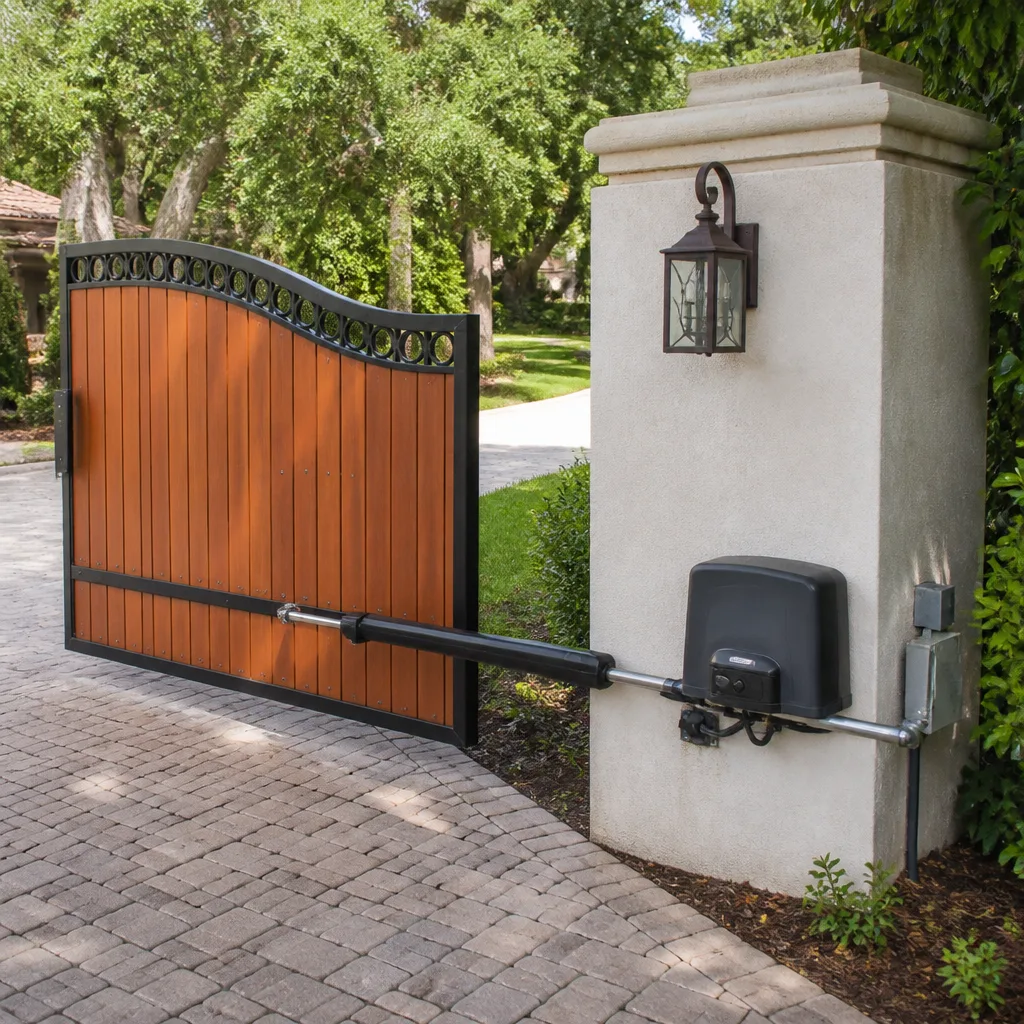
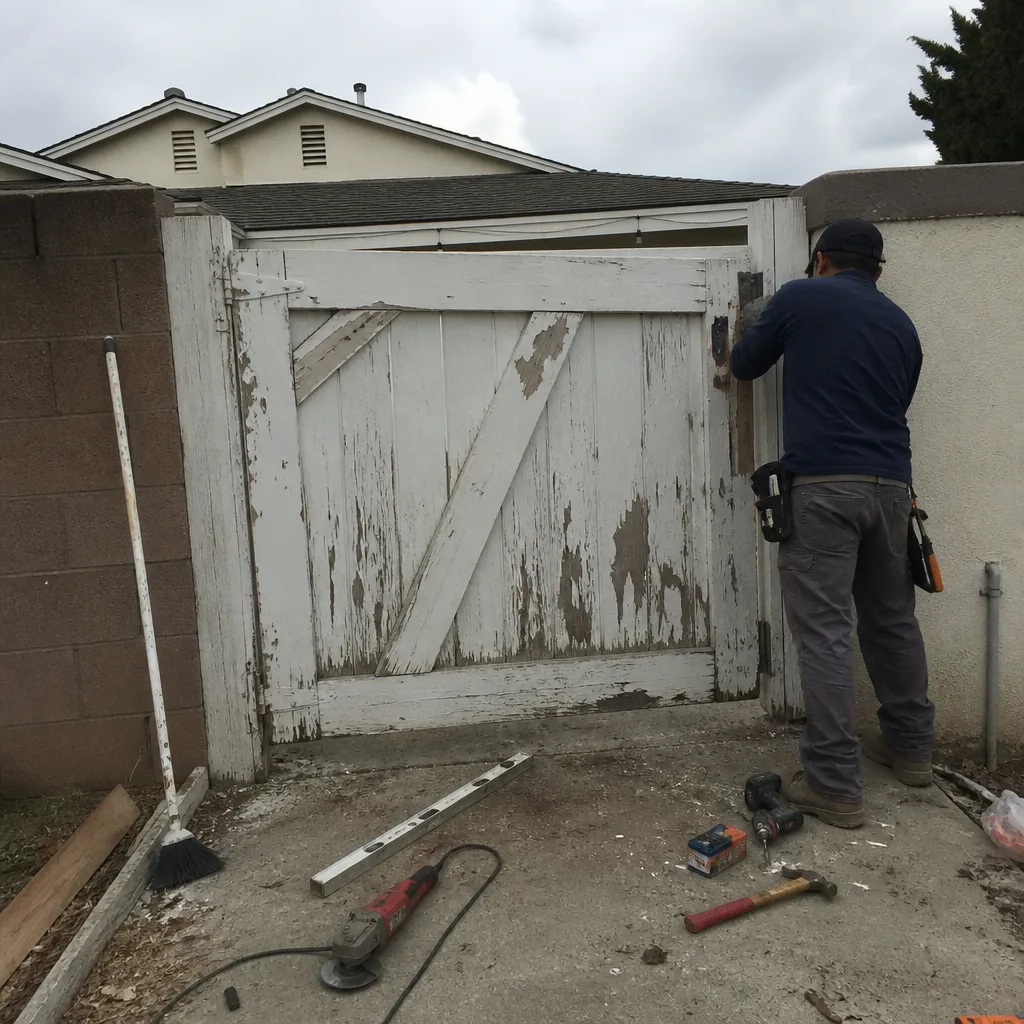 Before
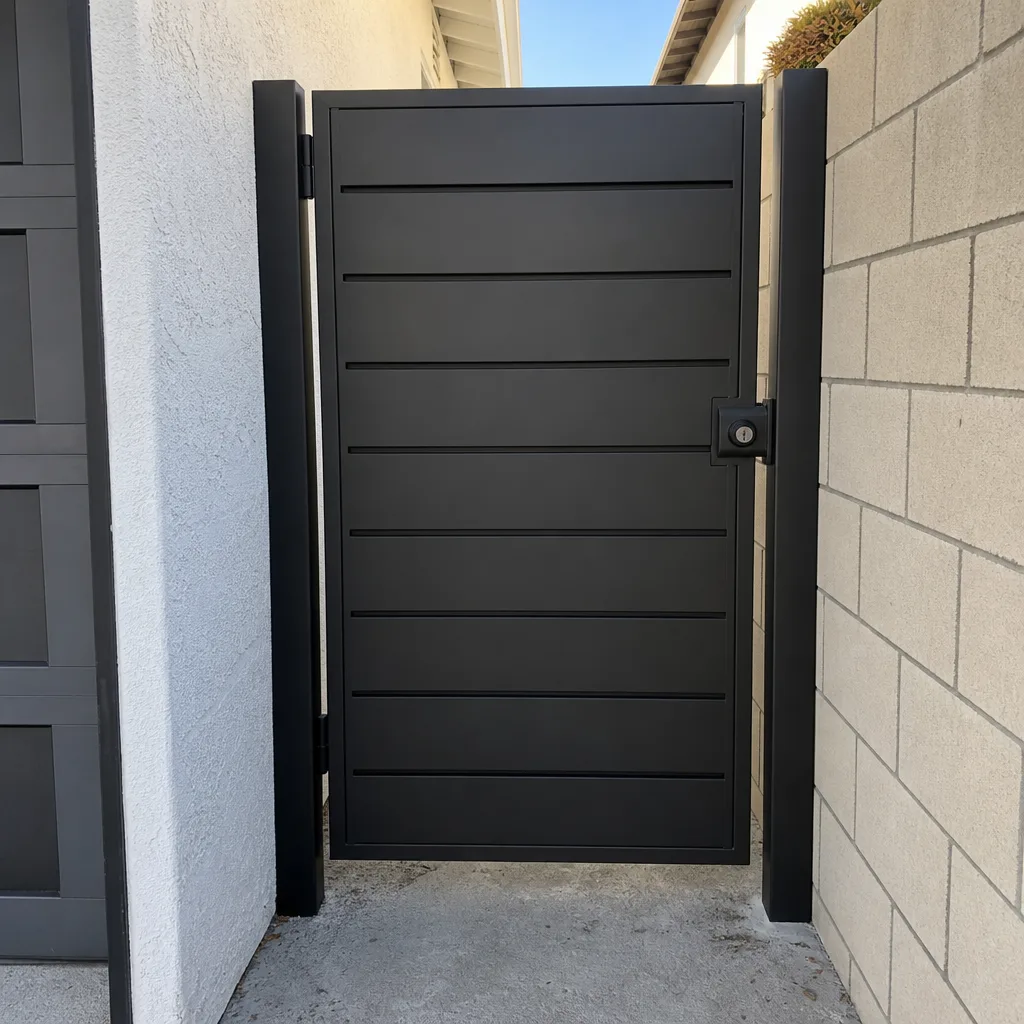 After
After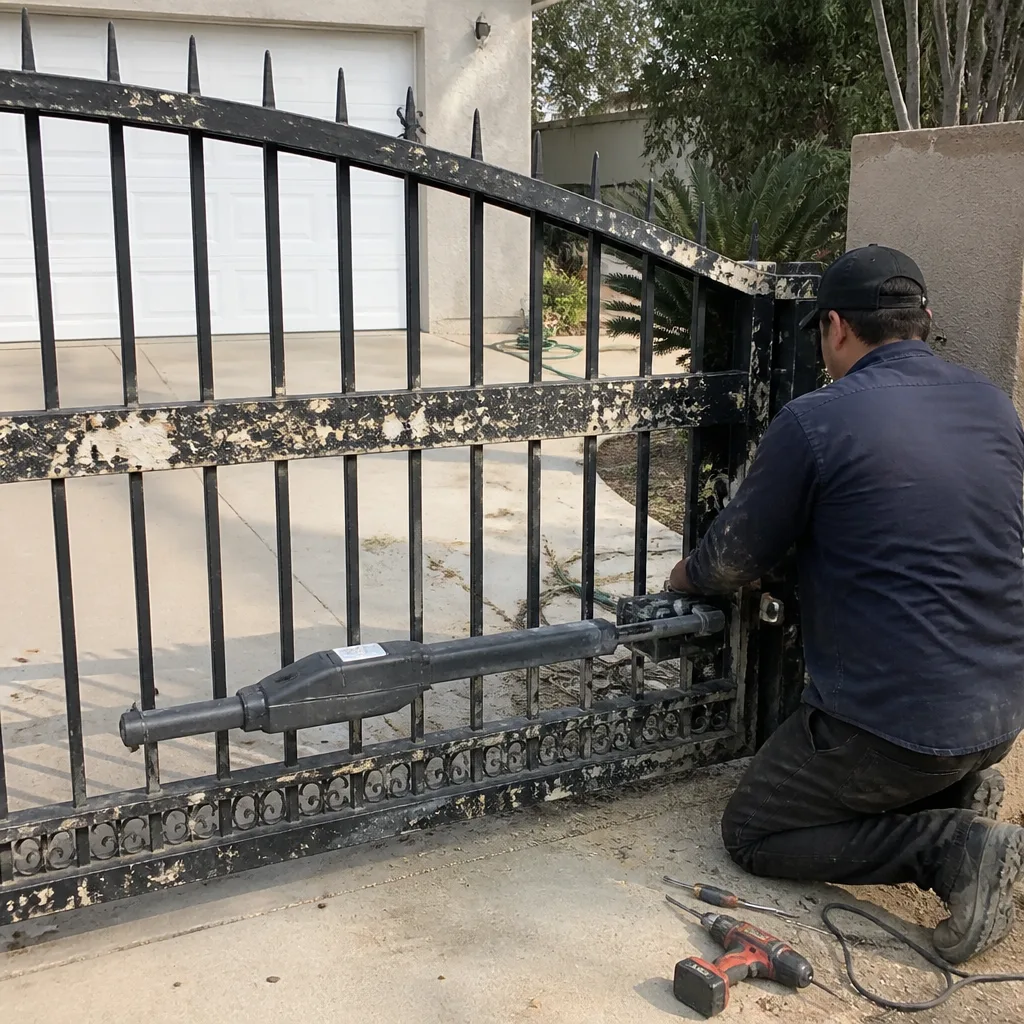 Before
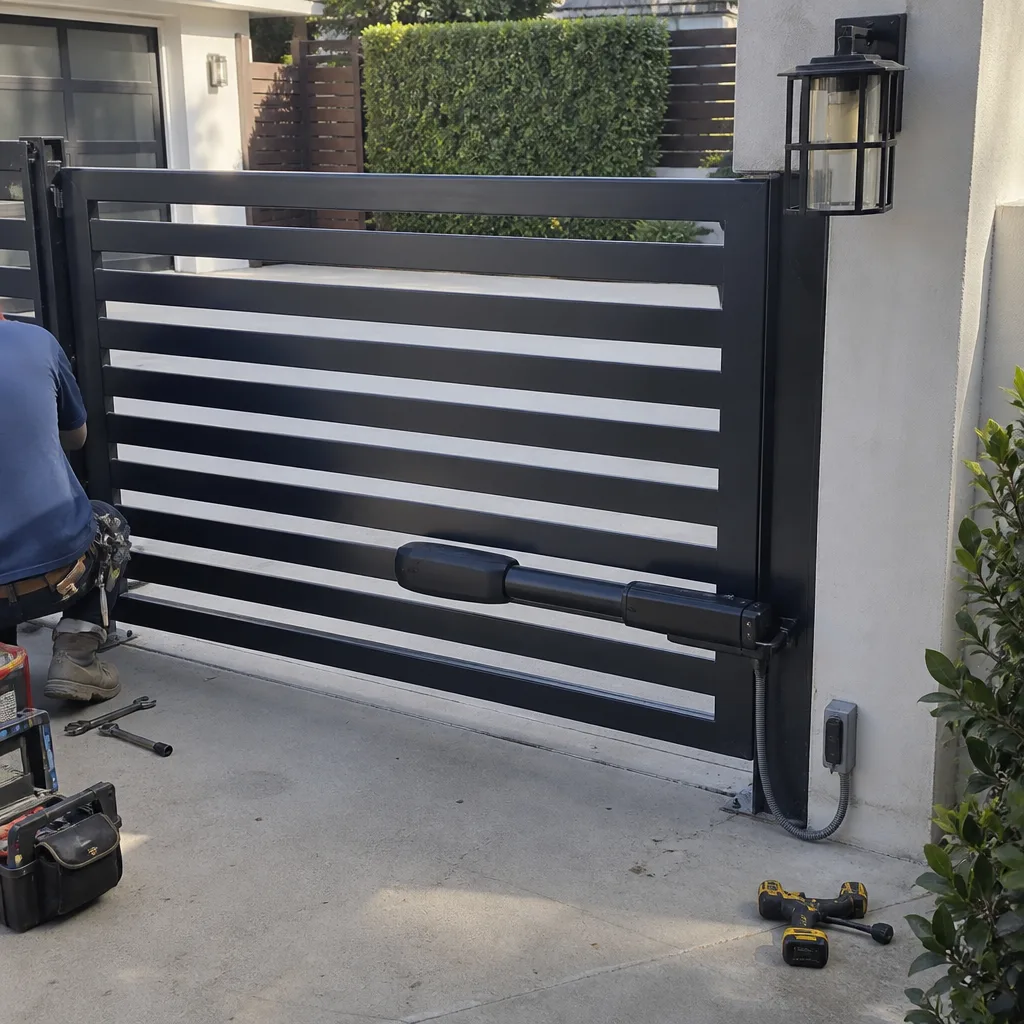 After
After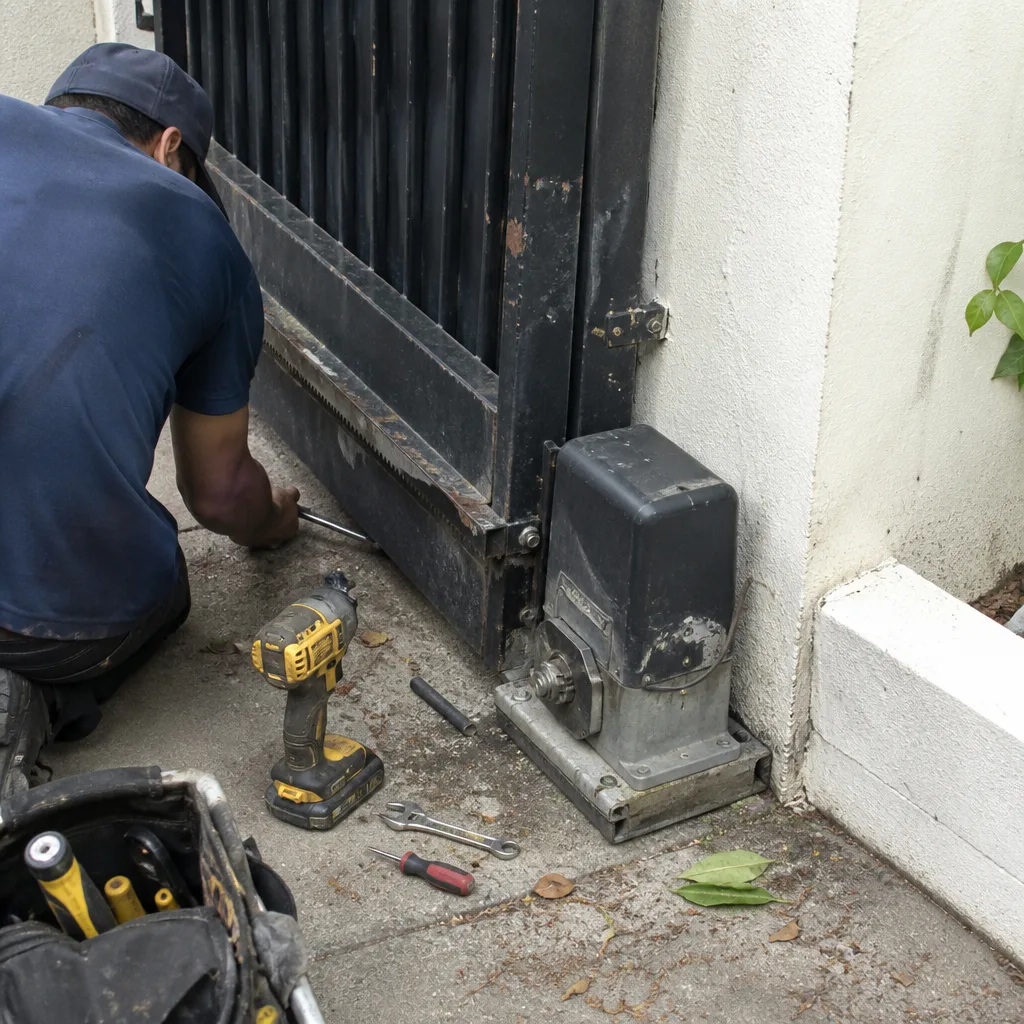 Before
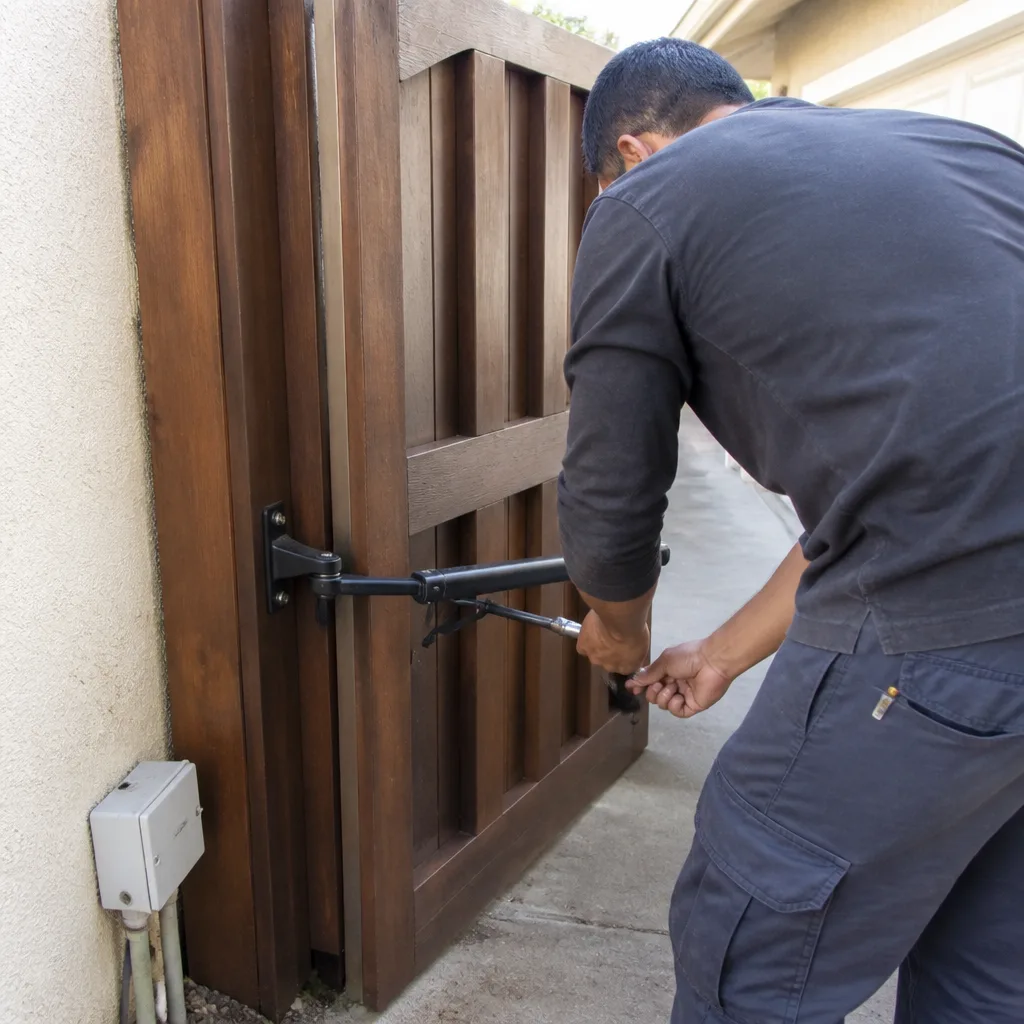 After
AfterGate Repair Warning Signs: A Costa Mesa Homeowner’s Reference Guide
Most gate failures announce themselves weeks before the gate actually stops working. A slight sag, a new groan from the motor, a hesitation on the opener - these are not random noises. They are the gate telling you something specific, and catching the message early is the difference between a $89 tune-up and a full track replacement. In Costa Mesa, where salt air off the Pacific and summer heat work on metal year-round, those warning signs show up earlier and move faster than homeowners expect. This guide walks through what to look for, what each sign means, and what actually needs to happen when you spot one.
Quick Answer
The most common warning signs that a gate needs repair are sagging or dragging, grinding or squealing noises from the motor, slow or jerky movement, a gate that stops mid-travel and reverses, and a keypad or remote that only works intermittently. Most of these start as minor mechanical issues - worn rollers, a dry gearbox, a misaligned track - and cost far less to fix early than to replace later. If your gate in Costa Mesa shows any of these signs, a same-day inspection will usually catch the problem while it is still a repair, not a replacement.
Table of Contents
- 1. A Sagging Gate: The Most Common First Sign
- 2. New Noises From the Motor: Grinding, Squealing, Clicking
- 3. Slow or Jerky Movement: What the Gate Is Trying to Tell You
- 4. Stops Mid-Travel and Reverses: Sensor, Force, or Obstruction
- 5. Intermittent Remote or Keypad Response
- 6. Rust, Paint Blisters, and Costa Mesa Salt Air
- 7. The Gate Closes Too Hard or Bounces at the Stops
- Common Mistakes to Avoid
- When to Call a Professional
- Frequently Asked Questions
- The Bottom Line
1. A Sagging Gate: The Most Common First Sign
A gate that has started to sag is the clearest warning sign a homeowner will ever get, and it is also the one most often ignored. You will notice it first as a gate that scrapes the driveway near the latch side, or one that needs a little lift to close properly. On a double gate, one leaf will hang visibly lower than the other. The cause is almost always the same: hinge wear, post shift, or a weld that has begun to fatigue. On a typical Costa Mesa driveway gate weighing 300 to 600 pounds, the hinge post carries that load every single cycle, thousands of times a year.
Here is what we know from working on gates across Costa Mesa neighborhoods: a sagging gate never corrects itself. The sag places extra load on the opener motor, which then works harder on every cycle. That extra strain shortens the life of the motor and wears the drive gear faster. It also changes the geometry of the gate’s travel arc, which means the gate begins to bind at some point in its travel. The fix is rarely complicated - re-welding a hinge, shimming a post, or replacing a worn hinge block - but it needs to happen before the gate has dragged long enough to carve a groove in the concrete or twist the frame.
What to check this week:
- Stand back and sight down the top rail of the gate. Is the top line straight, or does it dip toward the latch side?
- Open the gate halfway and let it sit. Does it stay put, or does it drift closed or open on its own?
- Look at the gap between the two gate leaves on a double gate. The gap should be even from top to bottom.
- Check the concrete or asphalt where the gate travels. A fresh scrape mark or a worn groove is a record of the sag.
In our experience, a sag caught within the first month costs a fraction of what the same gate costs to repair after a year of dragging. The older the gate, the more important this is: a forty-year-old iron gate with a fresh weld at the hinge can close like the day it was hung.
2. New Noises From the Motor: Grinding, Squealing, Clicking
Gate motors do not run silent, but a healthy operator makes a steady, even sound - a low mechanical hum with no sharp notes. When that changes, pay attention. A grinding noise usually means the drive gear inside the operator is wearing, or the chain or belt has lost tension and is slipping. A squealing sound points to a dry bearing or a belt that is glazing. A rapid clicking when you press the remote often means the control board is receiving the signal but failing to engage the motor, which is an electrical problem, not a mechanical one.
These sounds are the gate telling you exactly what is failing, and in most cases the repair is straightforward when caught early. A worn gear replaced on a DoorKing operator is a one-visit job. That same gear left to grind for three months can score the output shaft, and then the repair becomes a motor replacement. The same logic applies across brands - we service Ghost Controls, Elite, Mighty Mule, and others, and the failure pattern is consistent: the noise comes first, the major damage comes later.
Here is a practical list of sounds and what they typically mean:
- Grinding or crunching: worn gear teeth inside the operator, or metal-on-metal contact in the drive train.
- Squealing: dry or failing bearing, or a belt slipping on a pulley.
- Rapid clicking but no movement: control board issue, capacitor failure, or a limit switch problem.
- Humming with no movement: motor is getting power but the drive is bound or the capacitor has failed.
- Metal-on-metal scraping: gate dragging on the ground or a wheel bearing that has collapsed.
If the sound is new, or has gotten louder in the last month, do not wait for the gate to fail entirely. A Costa Mesa tech can usually diagnose the source in under an hour, and the repair is far cheaper while the part still exists in one piece.
3. Slow or Jerky Movement: What the Gate Is Trying to Tell You
A gate that opens noticeably slower than it did a year ago, or that moves in small jerks instead of one smooth sweep, is showing early resistance somewhere in the system. Sometimes the cause is mechanical: a wheel that has stopped rolling and is now dragging, a hinge that is binding, or a track that has shifted. Sometimes it is electrical: a motor that is losing torque, a battery in a solar-powered system that is at the end of its life, or a capacitor that is no longer delivering a clean start.
In Costa Mesa, solar-powered gate operators are common on larger estates in neighborhoods like Mesa Verde and the Eastside, and those systems depend on batteries that wear out on a predictable schedule. A solar gate that moves slower in the evening or after a string of overcast days is usually running on a tired battery. That is a predictable repair. A swing gate that moves in small lurches, pausing for half a second every few feet, is more often fighting a mechanical bind - and every lurch is putting shock load through the motor.
Step-by-step: what to observe before you call
- Time the gate from fully closed to fully open. If you have noticed it being slower, write down the time now. Compare it to what feels normal from memory.
- Watch the movement closely. Smooth and steady, or does it catch and release at the same point every cycle?
- Note whether the slowness happens only at the start, only near the end, or through the entire travel.
- Listen for the motor pitch dropping, which indicates it is working harder than it should.
- If you have a solar system, note whether the problem is worse in the morning or after cloudy days.
That five-minute observation gives a technician most of what they need to know before they arrive. It also gives you a clear picture of whether the problem has been getting worse over time, which is useful information. A jerky gate is not a quirk; it is a symptom with a specific cause.
4. Stops Mid-Travel and Reverses: Sensor, Force, or Obstruction
A gate that stops partway open and then reverses direction is usually not broken - it is doing exactly what its safety system is designed to do. Gate operators since the early 2000s are required to detect resistance and reverse, the same way a garage door does. When that safety feature triggers in the middle of a clear driveway, the system is sensing something that is not there. That false signal comes from one of three places: a misaligned or dirty photo eye sensor, a force setting that has drifted too sensitive, or a mechanical bind that the motor interprets as an obstruction.
The photo eye sensors sit near the ground on either side of the gate opening. In Costa Mesa, these lenses collect dust, spider webs, and the fine grit that blows through during Santa Ana winds. A dirty lens can send a false obstruction signal every single cycle. Cleaning the lens is simple and often solves the problem. But if the gate continues to stop and reverse after the lenses are clean, the issue is more likely a force sensitivity setting or a mechanical resistance point that the system is correctly detecting.
The distinction matters: a gate that reverses because the sensor is dirty needs a five-minute cleaning. A gate that reverses because the motor is pushing against a worn wheel or a binding hinge is a real mechanical problem, and the safety system is doing its job by refusing to force the gate through it. Do not disable or bypass a safety sensor to make the gate close. It is there because a moving gate can cause serious injury, and overriding it is never the correct repair. The correct fix is to find and correct the resistance.
5. Intermittent Remote or Keypad Response
When a remote works from the car in the morning but not the afternoon, or a keypad accepts the code only when pressed a certain way, the problem can be frustrating to pin down. In most cases, it is not the remote and not the keypad itself. It is the receiver, the antenna, or the power feeding the control board. Intermittent response is one of the most common service calls we handle in Costa Mesa, and the pattern of the failure usually points directly at the cause.
Here is a practical way to narrow it down:
- Works sometimes from the same distance: receiver or antenna issue. The antenna may have been knocked out of position or have a corroded connection.
- Works only from very close range: the remote battery is weak, or the receiver’s range has degraded. Try a fresh battery first; it solves this more often than people expect.
- Keypad works but remote does not: the keypad is hardwired or on a different frequency; the problem is likely the remote’s battery or the receiver circuit.
- Both fail at the same time: power supply to the control board, or a control board that is beginning to fail.
- Fails only when hot: a control board or capacitor that is heat-sensitive - this is more common in Costa Mesa summers than most homeowners realize.
If you have changed the remote battery and the problem persists, the next step is a service call. A technician can test the receiver output, check the antenna, and identify whether the board is receiving power cleanly. The fix is often a simple component, not a whole new system, when caught before the board itself gives out.
6. Rust, Paint Blisters, and Costa Mesa Salt Air
Costa Mesa sits roughly three miles from the Pacific, and the marine layer that rolls in most evenings carries salt and moisture. For a metal gate, that means the corrosion clock runs faster here than it does ten miles inland. Surface rust on a driveway gate is rarely the immediate problem - the structural concern is what the rust is doing at the welds, the hinge points, and the bottom rail where moisture collects.
Here is what we see regularly on gates in Costa Mesa neighborhoods within the salt influence zone, especially in the lower-lying areas south of Baker Street and west of the 55 freeway:
- Paint blisters on the bottom rail: moisture has gotten under the powder coat or paint and is lifting it from the inside. The metal underneath is rusting.
- Rust staining at welds: welds are the first places to show corrosion because the heat-affected zone around a weld is more electrochemically active than the surrounding metal.
- Pitting on hinge brackets: hinge hardware carries the gate’s entire weight, and pitting reduces the cross-section of the metal that is actually holding the gate.
- White powdery residue on aluminum gates: aluminum does not rust, but it corrodes, and that white dust is aluminum oxide. It means the protective finish is gone in that spot.
The treatment schedule depends on the gate’s material and finish. A wrought iron gate in Costa Mesa should be inspected for rust every year, and touched up before the rust reaches the pitting stage. An aluminum gate needs less attention but still benefits from a rinse and a visual inspection every year, especially at the joints. Controlling rust is a maintenance task, and it matters because the alternative - a gate that rusts through at a hinge and drops - is both dangerous and an expensive replacement.
7. The Gate Closes Too Hard or Bounces at the Stops
A gate that slams into its closed position, or bounces back a few inches after hitting the stop, is transferring shock through the gate leaf, the hinges, the operator mount, and the motor. That shock is invisible, but it is cumulative. Every hard close flexes the metal slightly and hammers the motor’s gearbox. Over time, the welds at the hinges begin to work-harden and crack, and the operator’s limit switch wears out of adjustment.
The limit switch controls where the motor stops pushing. When it drifts out of adjustment - and they all drift eventually - the motor keeps driving for a split second after the gate has already hit the stop. That is the bounce you see. The correction is a limit switch adjustment and a check of the gate’s closing speed, which is a standard part of a gate tune-up. On a gate that has been closing hard for a while, the tune-up should also include a torque check on the hinge bolts and a visual inspection of the welds.
In Costa Mesa, where many homes have gates that swing over concrete driveways rather than along a track, a hard-closing gate can also crack the concrete at the stop post. We have seen stop posts that have been knocked slightly out of plumb by years of hard closings, and once the post moves, the alignment of the entire system begins to shift with it. The $89 tune-up that catches this early is a bargain against the cost of resetting a post or re-hanging a gate leaf.
Common Mistakes to Avoid
- Ignoring the new noise. A gate that sounds different today than it did last month is telling you something. Waiting until it fails means the repair moves from a gear or bearing to a motor or control board.
- Lubricating without cleaning first. Spraying lubricant over dirt and grit creates a grinding paste that accelerates wear. The correct sequence is clean the part, then lubricate it, and use the right lubricant for the part - gate hardware needs different products for hinges than for chains.
- Adjusting the force settings yourself to “fix” a reversing gate. Increasing the force so the gate pushes through an obstruction defeats the safety system. Find the obstruction instead.
- Painting over rust without treating the metal. Rust continues to spread under fresh paint. The metal needs to be cleaned and treated before it is painted, or the paint is cosmetic only.
- Replacing the opener when the problem is mechanical. A new motor bolted to a gate that is binding or sagging will fail the same way the old one did. The gate itself has to be right before the operator can run cleanly.
- Skipping the annual inspection because “it still works.” Gates fail on a schedule in Costa Mesa’s salt air, and the annual look-over is the cheapest insurance there is against a surprise breakdown.
- Using a general handyman for gate automation work. The mechanical half and the electrical half of a gate system interact, and a great welder who does not understand operators can unknowingly create a problem that a gate specialist would have caught in ten minutes.
When to Call a Professional
Some gate repairs are genuinely simple - a fresh remote battery, a dirty photo eye lens, tightening a hinge bolt that has worked loose. But when the problem involves the motor, the control board, the safety sensors, or any weld that carries the gate’s weight, the right time to call is the moment you notice the symptom. A gate that has started to act differently is not going to heal itself, and in a salt-air climate like Costa Mesa, the deterioration does not pause while you wait. If your gate is sagging, making noise, moving strangely, or refusing to close correctly, call Ironworks Gate Co. at (213) 754-8947. We will come out, find the source of the problem, and give you a written price before any work begins. Estimates are free, and a live person answers the phone.
Frequently Asked Questions
Gate repair in Costa Mesa typically ranges from $89 for a seasonal tune-up to $180 to $450 for common mechanical repairs like hinge replacement, wheel replacement, or limit switch adjustment, while a full operator replacement generally runs between $900 and $2,500 depending on the brand and the gate’s size. The final number depends on what has actually failed, which is why we quote a written price before any work starts. Call (213) 754-8947 for a free estimate on your specific gate.
In most cases, yes - a gate that is stuck open, stuck closed, or making a serious noise can usually be diagnosed and repaired the same day, and most jobs are completed in a single visit. Our trucks carry common parts for the major brands, so the repair does not usually have to wait on an ordered component. If your gate has failed and you need it working today, call (213) 754-8947.
A gate opener motor burns out from working against resistance for a long period of time - a sagging gate, a binding hinge, a wheel that has stopped rolling - or from a failed capacitor that makes the motor draw too much current at startup. The motor itself is rarely the original cause. That is why we inspect the mechanical condition of the gate before replacing an operator, because a new motor on a binding gate will eventually fail the same way the old one did.
A quality gate opener that is properly installed on a properly aligned gate typically lasts 10 to 15 years in Costa Mesa, though the salt air can shorten that on coastal-adjacent properties if the operator’s housing is not sealed well. The gate’s mechanical condition has more effect on the motor’s life than the brand does. A gate that sags or binds will take years off even the best operator.
Yes. We are trained and equipped on nine major gate-automation brands, including LiftMaster, FAAC, BFT, Linear, Viking, Ghost Controls, DoorKing, Elite, and Mighty Mule. Whatever operator is on your driveway, we can diagnose it and quote the repair before any work is done.
The $89 tune-up covers a full inspection of the gate’s mechanical and electrical systems, cleaning and lubrication of the moving parts, limit switch adjustment, force setting check, and a written report on the gate’s condition. It is designed to catch the warning signs described in this guide before they become repairs. Call (213) 754-8947 to schedule one for your Costa Mesa gate.
The Bottom Line
Gates talk. The sag, the grind, the jerk, the bounce - each one is a specific signal with a specific cause, and in Costa Mesa’s salt air, those signals move faster than they do inland. The homeowner who catches a sagging hinge in the first month pays for a hinge. The homeowner who waits pays for the hinge, the frame, the wheel, the motor, and the new gate that could have been avoided. This guide exists so you know what to look for and know when to call. A written quote costs nothing, and the phone is answered by a person. That is the simple part.
Written by Victor Salinas, Owner at Ironworks Gate Co., serving Costa Mesa since 2013.