
Last updated August 25, 2026
Free on-site gate assessment - hinges, posts, and your LiftMaster or Nice gate operator checked before anything is quoted
The assessment is free and the quote is the invoice.

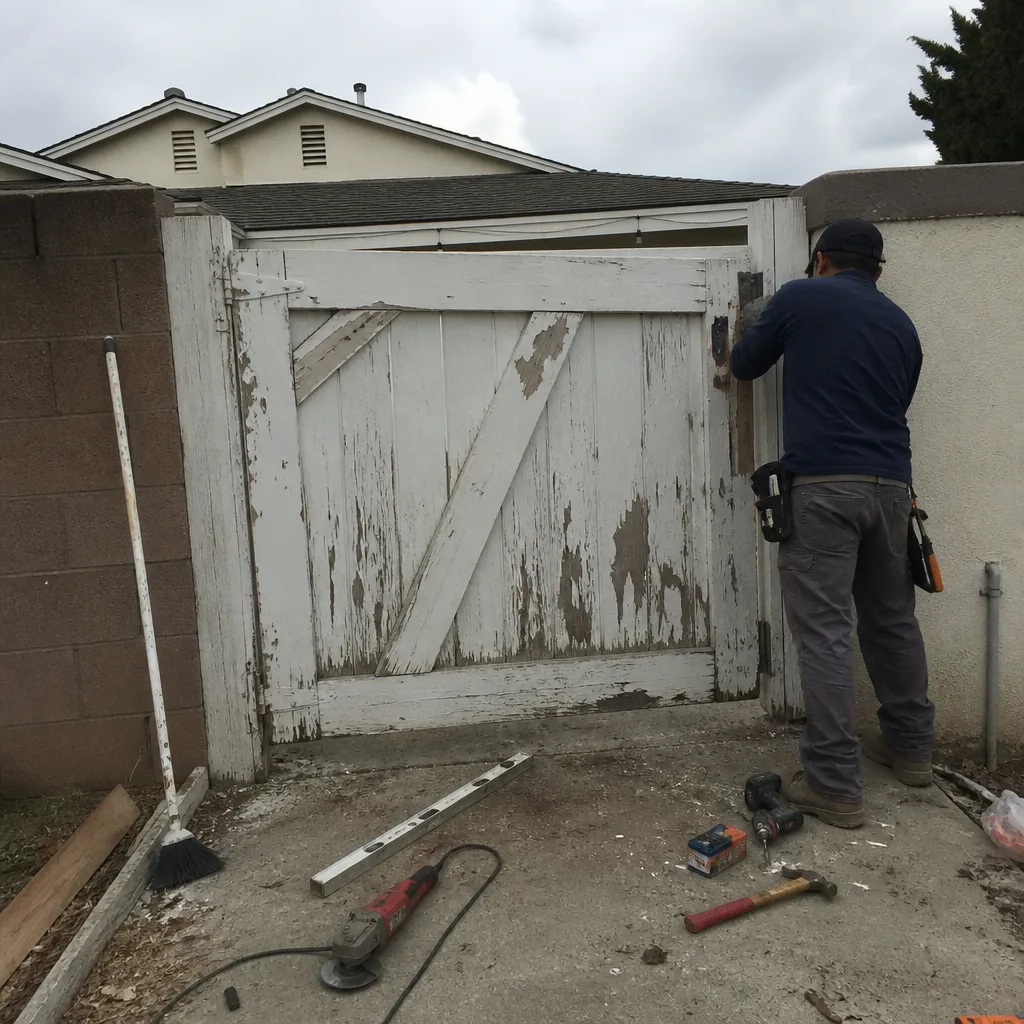 Before
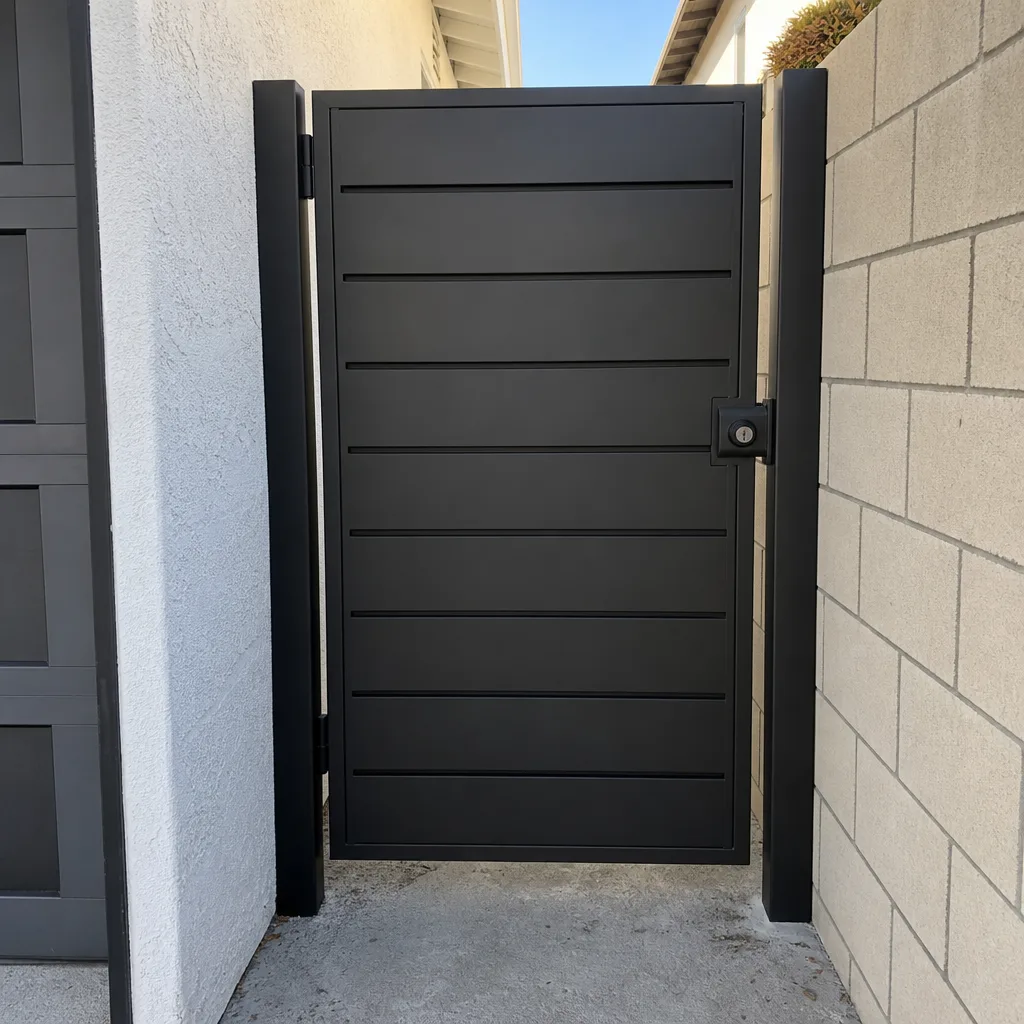 After
After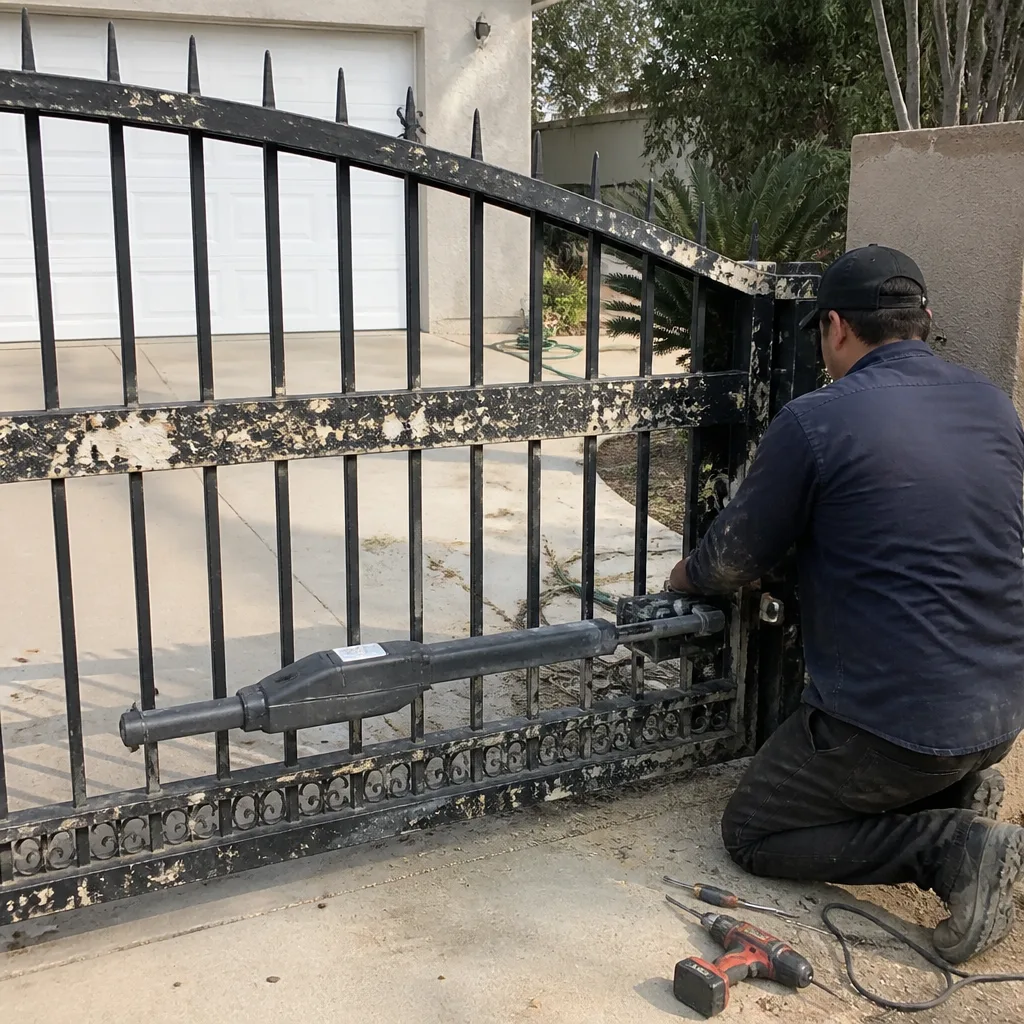 Before
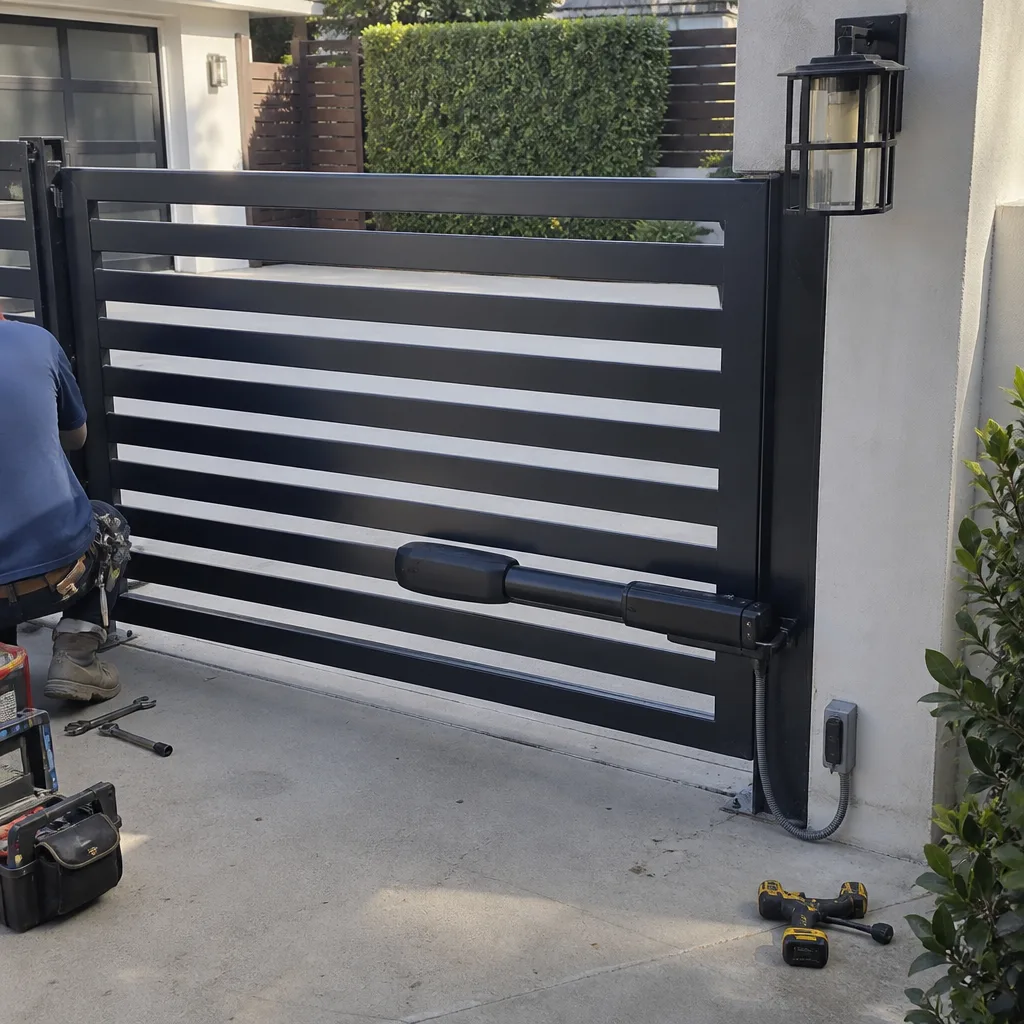 After
After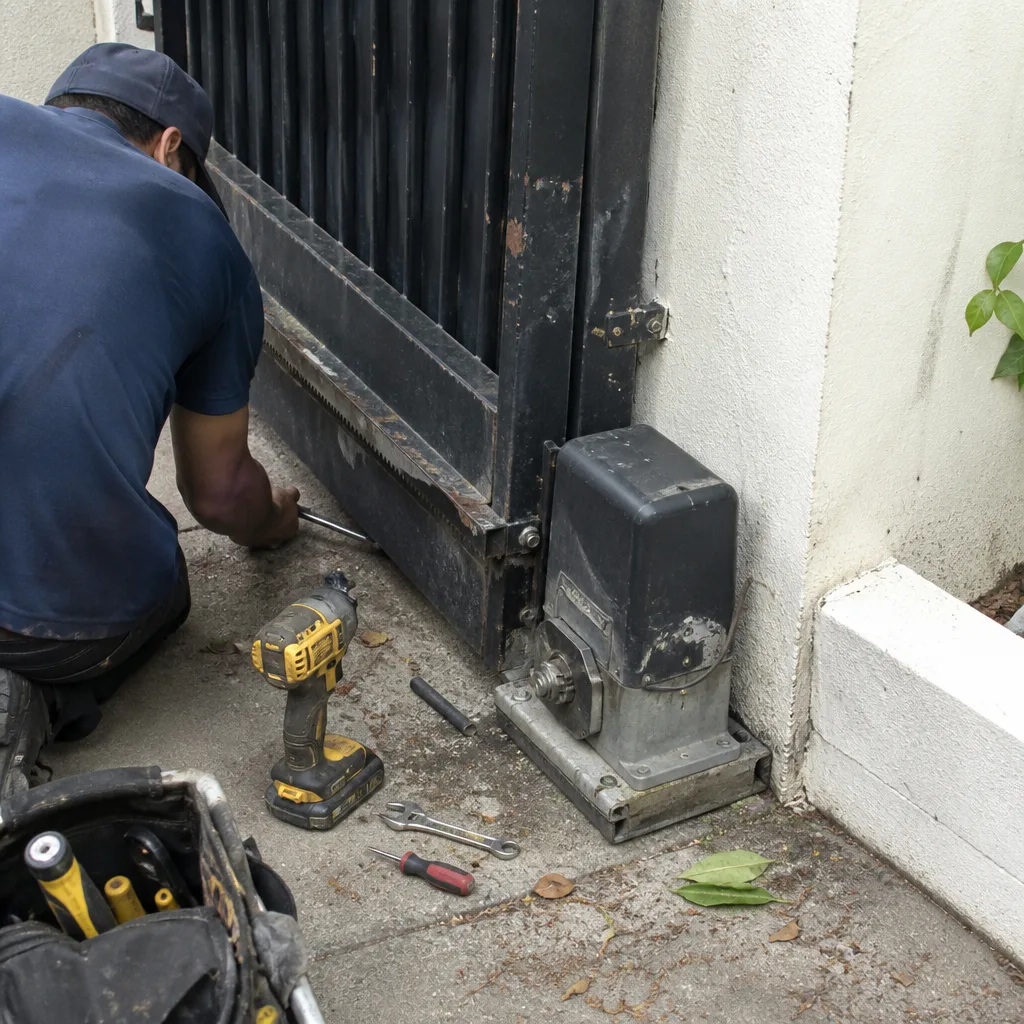 Before
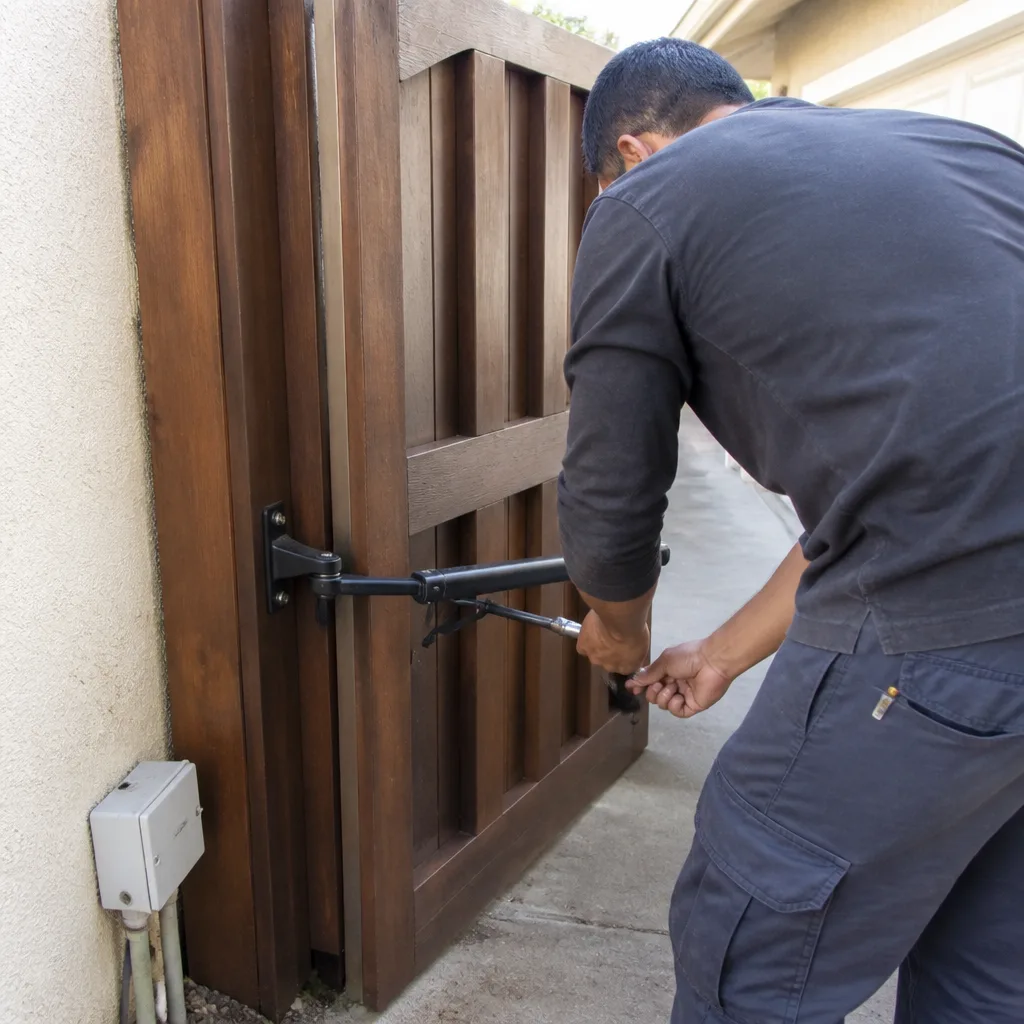 After
AfterGate Repair Maintenance Checklist for Costa Mesa Homeowners
Most gate failures in Costa Mesa don’t start with a dramatic snap or a smoking motor. They start quietly: a hinge that’s been carrying an extra forty pounds for two years, a keypad button that needs a harder press each month, a motor that runs three seconds longer than it did last spring. By the time the gate stops moving, the real damage was done long before. This guide walks through exactly what to check, when to check it, and what to do when you find something wrong. It’s written from the perspective of a company that has worked on Costa Mesa gates long enough to know which problems show up on Westside driveways versus Mesa Verde estates versus the canyon-adjacent properties near Fairview Park. Use it as a seasonal routine, and you’ll catch the $80 problem before it becomes the $800 one.
Quick Answer
A proper gate maintenance routine in Costa Mesa means checking hinges, wheels, and tracks every three months; testing safety sensors and auto-reverse monthly; lubricating moving parts twice a year; and scheduling a professional tune-up annually. The coastal air, morning marine layer, and dry summer heat each cause specific wear patterns on gates in this city, and most homeowners will get the longest life from their gate by following a seasonal schedule tied to Costa Mesa’s weather, not a generic national checklist.
Table of Contents
- Understanding Your Gate: What Costa Mesa Weather Does to Metal and Motors
- The Monthly 10-Minute Safety and Function Check
- Seasonal Deep Maintenance: What to Do Each Quarter
- Hinges, Wheels, and Hardware: The Skeleton of Your Gate
- Motors, Openers, and Automation: Keeping the Brain Healthy
- Corrosion, Marine Layer, and Our Coastal Climate
- Common Mistakes to Avoid
- When to Call a Professional
- Frequently Asked Questions
- The Bottom Line
Understanding Your Gate: What Costa Mesa Weather Does to Metal and Motors
Costa Mesa sits close enough to the Pacific that the marine layer rolls in most mornings, especially in June and July, and far enough inland that summers get properly hot and dry. That combination creates a specific set of problems for driveway gates. The morning moisture settles on cold steel and cast iron, encouraging surface corrosion even when it never actually rains. Then the afternoon sun burns off the moisture and bakes the metal, which causes paint to expand, contract, and eventually crack. Once moisture gets under cracked paint, rust begins. We see this pattern concentrated on the lower rail of swing gates and along the welded joints of steel gates throughout the city.
The same coastal air affects gate motors differently. Humidity from the marine layer condenses inside operator housings when temperatures swing, and that moisture slowly degrades circuit boards, limit switches, and capacitor connections. Motors in Costa Mesa that are never opened and inspected tend to fail at the electrical connections first, not the gears. The mechanical parts are usually fine. It’s the corrosion on a terminal block or a limit switch that causes the gate to stop mid-cycle or refuse to close all the way. Homeowners who keep the motor housing clean, dry, and properly sealed get significantly more years from their operator, regardless of brand.
What matters most for this checklist is understanding that your gate has two entirely separate life cycles. The mechanical components (hinges, wheels, track, chain, arms) wear out from friction and weight. The electrical components (motor, board, sensors, keypad, receiver) degrade from moisture, heat, and power fluctuations. A maintenance routine that addresses both halves of the system will keep the gate working far longer than addressing just one. No gate can be made maintenance-free, but a gate that gets twelve small, correct checks per year will outlast one that gets one frantic repair call every three years.
The Monthly 10-Minute Safety and Function Check
Most homeowners skip monthly maintenance because it sounds like work. This version takes ten minutes and requires no tools beyond a flashlight and a pair of eyes. The point is to catch change, not to fix everything on the spot. Run through these eight items once a month, ideally on the same day you pay the water bill or do another fixed monthly task, and you’ll know your gate better than anyone else in the neighborhood knows theirs.
- Watch one full open and close cycle. Stand where you can see the gate, the hinge side, and the latch side. Note any hesitation, jerkiness, or change in speed. A gate that used to take nine seconds to open and now takes thirteen is telling you something.
- Listen during the cycle. New grinding, squealing, or clicking sounds are early warning signs. A healthy gate with a healthy motor is quiet enough that you barely notice it operating.
- Check the hinge side and latch side clearance. Look at the gap between the gate and the post or pillar. If the gap at the top is wider than at the bottom, the gate is sagging, and every day it sags further adds wear to the hinges.
- Test the safety reverse. With the gate opening, put a gloved hand or a cardboard box in its path. The gate should stop or reverse without significant force. Test it in both directions if your system allows.
- Check the photo eyes or edge sensors. Look for dirt, spider webs, or moisture inside the sensor lenses. Clean them with a dry cloth. Misaligned sensors are one of the most common reasons a gate refuses to close.
- Inspect the ground track or gate wheels. Clear away leaves, dirt, and pebbles that have collected in the track. In Costa Mesa, eucalyptus debris from older neighborhoods like Mesa Verde can pile up fast and bind a sliding gate.
- Look at the chain or belt on the operator. It should have a slight give but not be loose enough to sag visibly. Check that it hasn’t developed any stiff links or frayed edges.
- Run the keypad and any remote controls. Press every button once. A keypad button that takes two tries is about to fail completely, and it’s much easier to replace before it leaves you locked out.
This monthly pass will catch most problems in their cheapest form. A hinge that’s just beginning to wear can be adjusted or shimmed. A safety sensor with a cracked lens can be replaced for a modest part cost. The alternative is discovering these same problems when the gate drops onto your car or refuses to open on the morning you need to leave early.
Seasonal Deep Maintenance: What to Do Each Quarter
Once per quarter, set aside 30 to 45 minutes for a deeper pass. These are the tasks that keep the gate operating smoothly year after year. The best schedule in Costa Mesa is tied to the weather pattern: early January after the rains, early April before the marine layer sets in, early July when the fog is thickest, and early October as the dry Santa Ana season begins.
January: Post-Rain Inspection and Lubrication
- Check every hinge, bolt, and weld for rust that formed during the winter rains.
- Apply a light coat of penetrating oil to hinge pins and pivot points to displace any trapped moisture.
- Inspect the operator housing for water intrusion. Look for water lines or condensation marks inside the cover.
- Test the manual release to make sure the gate can be opened by hand if the power goes out during a storm.
- Clear drainage channels near the track or gate posts so standing water doesn’t linger.
April: Pre-Fog Preparation
- Wipe down all electrical connections, keypad surfaces, and sensor lenses with a dry cloth to prevent corrosion during the heavy June and July fog.
- Check the weather seal around the operator housing and replace if cracked.
- Lubricate the chain or belt according to the operator manufacturer’s recommendation. Most brands specify a dry lithium spray, not a wet oil that attracts dirt.
- Test the gate’s force settings if your operator has adjustable sensitivity. A gate that pushes too hard against an obstruction is a safety hazard.
July: Mid-Year Function and Safety Check
- Run the monthly checklist twice in one session, looking specifically for changes since spring.
- Inspect hinges and wheels for play. Grab the gate at the latch side and try to lift it. More than a quarter inch of movement means hardware is wearing.
- Check that the gate is still level. Use a simple bubble level on the top rail for a swing gate or on the uprights of a slide gate.
- Verify that all warning signs and safety labels are still legible and attached.
- Test the battery backup on the operator if you have one. Power outages are rare in Costa Mesa but they happen, and a dead backup battery is like no backup at all.
October: Pre-Santa Ana Dry Season Check
- Inspect all painted or powder-coated surfaces for chips and cracks that will expand during the dry, windy season.
- Lubricate hinges and pivots again with a light oil to prevent squeaking during the driest months.
- Clear away any dry leaves or debris that have collected near the gate, especially if you live near a canyon or wooded area where fire risk is higher.
- Check that the gate closes and latches properly when the winds blow. A gate that bangs against its stop in the wind needs a latch adjustment or a new closer.
Seasonal maintenance is where a $89 tuning pays for itself many times over. Ironworks Gate Co. offers a seasonal tune-up at that price in Costa Mesa, and it covers the full checklist plus a report on anything that might be wearing out. It’s a sensible option for homeowners who want the work done without spending their own Saturday on it.
Hinges, Wheels, and Hardware: The Skeleton of Your Gate
The metal that holds your gate up works harder than any other part of the system, and it gets the least attention. A typical steel driveway gate in Costa Mesa weighs between 300 and 800 pounds, and every one of those pounds hangs on two or three hinges. Over time, the hinge pins wear, the mounting bolts loosen, and the gate begins to sag. A sagging gate puts uneven pressure on the motor, makes the latch misalign, and eventually causes structural welds to crack. Replacing a worn hinge costs a small fraction of what it costs to repair a gate that fell because the hinge failed entirely.
For sliding gates, the equivalent components are the wheels and the track. The rollers, often made of nylon or steel with sealed bearings, carry the full gate weight and roll along the track every single cycle. When a wheel bearing wears out, the gate starts to drag or chug along the track. That extra friction makes the motor work harder, which shortens its life and increases your electricity draw. A sliding gate that used to glide and now sounds like a shopping cart with a bad wheel needs wheel replacement sooner rather than later.
Here’s what to check on your gate’s hardware, whether it swings or slides:
- Hinge pins: Look for visible wear, rust, or play. Lift the gate slightly. If the pin moves inside its sleeve more than a sixteenth of an inch, it needs replacement.
- Mounting bolts: Check every bolt on the hinge plates and the latch side. Use a wrench and gently test for tightness. Vibration from daily cycles loosens bolts over time.
- Weld joints: Look for hairline cracks where decorative elements meet the main frame. Costa Mesa’s temperature swings put repeated expansion stress on these joints.
- Wheels and rollers: Spin each wheel by hand while the gate is stationary. It should spin freely with no grinding. Check the rubber or nylon surface for flat spots.
- Track condition: Look for bends, dents, or debris accumulation. Damaged track sections should be replaced, not hammered back into shape, because a kinked section will wear out new wheels quickly.
- Latch and lock: Test the mechanical latch and any electric lock. The latch should engage firmly without slamming. A misaligned latch is a sign the gate has shifted.
In our experience serving Costa Mesa, the neighborhoods with the highest hinge wear are the older developments in Mesa Verde and College Park where gates were often installed decades ago and the original hardware is still in place. A hinge that has been carrying the same gate for 25 years doesn’t owe you anything. Replacing it on schedule is maintenance, not failure.
Motors, Openers, and Automation: Keeping the Brain Healthy
The operator is the part of your gate system that most homeowners never think about until it stops working. It’s a sealed box that sits at the side of the gate, containing a motor, a control board, capacitors, limit switches, and often a battery backup. In Costa Mesa’s humid mornings and hot afternoons, this box goes through more thermal and moisture cycling than operators in drier inland cities, and the result is predictable: electrical connections corrode, capacitors swell, and eventually the system fails.
Different opener brands have different maintenance requirements, and what works for one will damage another. We’re factory-trained on nine brands, including Ghost Controls and DoorKing for residential gates and Elite for heavier-duty applications, and we see the same pattern across all of them: operators that get opened and inspected twice a year last years longer than operators that stay sealed until they stop working. The inspection itself takes about fifteen minutes and catches moisture buildup, insect nests, and loose connections before they cause expensive damage.
Here is a five-step operator maintenance sequence you can follow without specialized tools:
- Disconnect power to the operator. Turn off the breaker, not just the switch, before opening any cover.
- Remove the cover and look. Look for water stains, condensation, spider webs, rodent droppings, or any evidence of insect activity. Costa Mesa’s warm climate means operators are prime real estate for spiders, and a spider web across a circuit board can cause a short.
- Inspect wire connections. Gently tug on each wire where it connects to the board or terminal strip. A connection that slides off with light pressure was about to fail.
- Check the gears and chain. Look for metal shavings or fine dust around the gear assembly. That dust is a sign of gear wear, and changing a gear before it strips will save the entire operator.
- Reattach the cover and test the full cycle. Listen for any new sounds and verify that the gate stops correctly at its open and close limits.
If any of this feels beyond what you want to handle, a professional tune-up covers the same ground. The $89 seasonal tune-up from Ironworks Gate Co. includes an operator inspection across all the major brands we service, and the technician will tell you plainly what needs attention and what can wait. No pressure, just facts.
Corrosion, Marine Layer, and Our Coastal Climate
Costa Mesa’s weather is kind to people and hard on metal. The city sits roughly three miles from the coast at its western edge, which means the marine layer reaches most neighborhoods on most mornings between March and August. That morning fog deposits a fine layer of salt-laden moisture on every exposed metal surface. Then the afternoon sun dries it off. Repeat that cycle 150 mornings per year, and you have a corrosion environment similar to what boats face, just slower.
The areas most affected are unpainted or scratched metal surfaces, bolt heads, hinge pins, chain links, and the underside of the gate where the original coating may have worn thin. Homeowners in Eastside Costa Mesa, slightly farther from the coast, see less of this than homeowners near Westside or the neighborhoods off Newport Boulevard, but the difference is one of degree, not kind. Every gate in the city should be treated as a coastal gate.
Preventing corrosion is simpler than removing it. The routine is this: keep painted surfaces intact, keep moving parts lubricated with the right product, and address any scratch or chip as soon as you see it. A small bottle of touch-up paint matched to your gate’s color takes ten minutes to apply and prevents years of rust. For hardware, a light machine oil works on hinge pins and pivot points, while a dry spray lubricant is correct for chains and slides. Avoid using WD-40 as a long-term lubricant; it is a solvent that cleans and loosens but does not provide lasting lubrication.
If you find active rust, the fix depends on depth. Surface rust can be wire-brushed, treated with a rust converter, and repainted. Deep rust, where the metal flakes away in sheets, needs the affected section cut out and replaced with new steel welded in. That is structural work, not cosmetic work, and it needs a gate specialist who understands load paths and welding. Ironworks Gate Co. handles this kind of repair regularly on Costa Mesa properties, and it’s the difference between a gate that lasts another five years and one that lasts another twenty.
Common Mistakes to Avoid
- Waiting until the gate stops working before calling anyone. By the time a gate fails completely, the repair is almost always more expensive than it would have been at the first sign of trouble. A two-second hesitation in the cycle is a warning sign, not a quirk.
- Using the wrong lubricant. Heavy grease on a chain picks up Costa Mesa’s dry dust and turns into a grinding paste. Use only the lubricant specified for your operator, and when in doubt, call the manufacturer or a dealer.
- Ignoring a misaligned photo eye. A gate that reverses for no visible reason usually has a sensor problem. Many homeowners respond by holding the remote and overriding the safety system, which creates a genuine hazard for kids and pets.
- Painting over rust without treating it. Paint seals rust into the metal where it continues to eat away underneath. Always remove or convert the rust before repainting.
- Adjusting the close force higher when the gate drags. If the gate is binding because of bad wheels or dry hinges, cranking up the force setting makes the motor push harder against the same resistance. That burns out motors and can make the gate unsafe.
- Replacing the operator when the real problem is the hardware. We see this regularly in Costa Mesa: a homeowner gets a quote for a new motor when the actual issue is a sagging hinge making the gate hard to move. The new motor fails in a year anyway because it’s still fighting the same drag. Diagnose before you replace.
- Skipping the manual release test. The manual release is what lets you open the gate when the power is out. If you’ve never used it, the day the power fails is the wrong day to discover it’s seized with rust.
When to Call a Professional
Some maintenance tasks are homeowner work, and some are not. If the gate is sagging enough that you can see the misalignment from the street, the hinges need replacement, and that means supporting the gate’s weight safely while the work is done. If the operator makes a grinding noise, the gear assembly may be failing, and opening the housing to inspect it involves electrical components that carry line voltage. If you find cracked welds or rusted-through sections, structural repair requires cutting, fitting, and welding new steel. If the safety sensors are inconsistent or the gate reverses unpredictably, the system is genuinely dangerous and needs a trained technician. None of these are do-it-yourself jobs, and none of them should be handled by a general handyman who doesn’t work on gates every day. Ironworks Gate Co. home covers all gate work in Costa Mesa, and we offer free estimates so you know the cost before any work begins. Call (213) 754-8947 to schedule a visit.
Frequently Asked Questions
Once a year is the right interval for most Costa Mesa gates, with a $89 seasonal tune-up being the most economical way to cover it. Gates that see more than 20 cycles per day, or that sit directly under trees, may benefit from twice-yearly service. Call (213) 754-8947 to schedule a tune-up and get the full checklist done by a technician who works on gates every day.
The earliest signs are a slower cycle, a new sound during operation, a gate that sags visibly, or a keypad button that needs extra pressure. Any one of these is worth a closer look, and all of them are cheaper to address early than late. If you’ve noticed any of these, describe them over the phone at (213) 754-8947 and we can usually tell you whether it’s urgent.
Gate repair in Costa Mesa typically ranges from $180 for a simple hinge adjustment or sensor realignment to $800 or more for a motor replacement or structural weld repair. The exact price depends on the gate type, the hardware involved, and the extent of the damage. Ironworks Gate Co. quotes every repair upfront, before any work starts, so the number on the estimate is the number on the bill. Call for a free estimate.
Yes, and more than most homeowners expect. The morning marine layer condenses inside operator housings and corrodes terminals, limit switches, and board connections. Motors in Costa Mesa tend to fail electrically before they fail mechanically, which is why an annual inspection makes a measurable difference in operator lifespan.
Yes, and many of the gates we work on in Costa Mesa were installed in the 1980s and 1990s. The original steel and hardware are often still sound, and the right repair keeps an older gate running for decades more. We carry parts for Ghost Controls, DoorKing, Elite, Mighty Mule, and several other major brands, so the fix is usually straightforward.
Every automatic gate has a manual release mechanism, usually a small lever or key on the operator itself. If you can access it, pull the release and push the gate open by hand. If the gate is too heavy to move or the release is seized, you need a repair visit. We answer the phone 24 hours a day at (213) 754-8947, and emergency calls are dispatched from Costa Mesa, not a call center in another state.
The Bottom Line
A gate is a machine, and like every machine, it responds to attention. The homeowners who get thirty years from a gate are not lucky; they’re observant. They hear the new sound, see the new sag, and deal with it in the same month instead of the same year. The checklist in this guide is built for Costa Mesa’s specific conditions: the morning fog, the afternoon heat, the eucalyptus debris, and the salt in the air. Follow it monthly, deeply each quarter, and have a professional tune-up once a year, and your gate will give you years of quiet, reliable service. When something does need repair, the right call is a company that works on gates every single day, quotes the price before the work begins, and stands behind every job in writing. That’s the standard we’ve held at Ironworks Gate Co. for over 42 years, and it’s the standard every Costa Mesa homeowner should expect from any gate company they let onto their driveway.
Call (213) 754-8947 for a free estimate, a second opinion, or a seasonal tune-up. A live person answers the phone, day or night.
Written by Victor Salinas, Owner at Ironworks Gate Co., serving Costa Mesa since 2013.