
Last updated August 25, 2026
Free on-site gate assessment - hinges, posts, and your LiftMaster or Nice gate operator checked before anything is quoted
The assessment is free and the quote is the invoice.
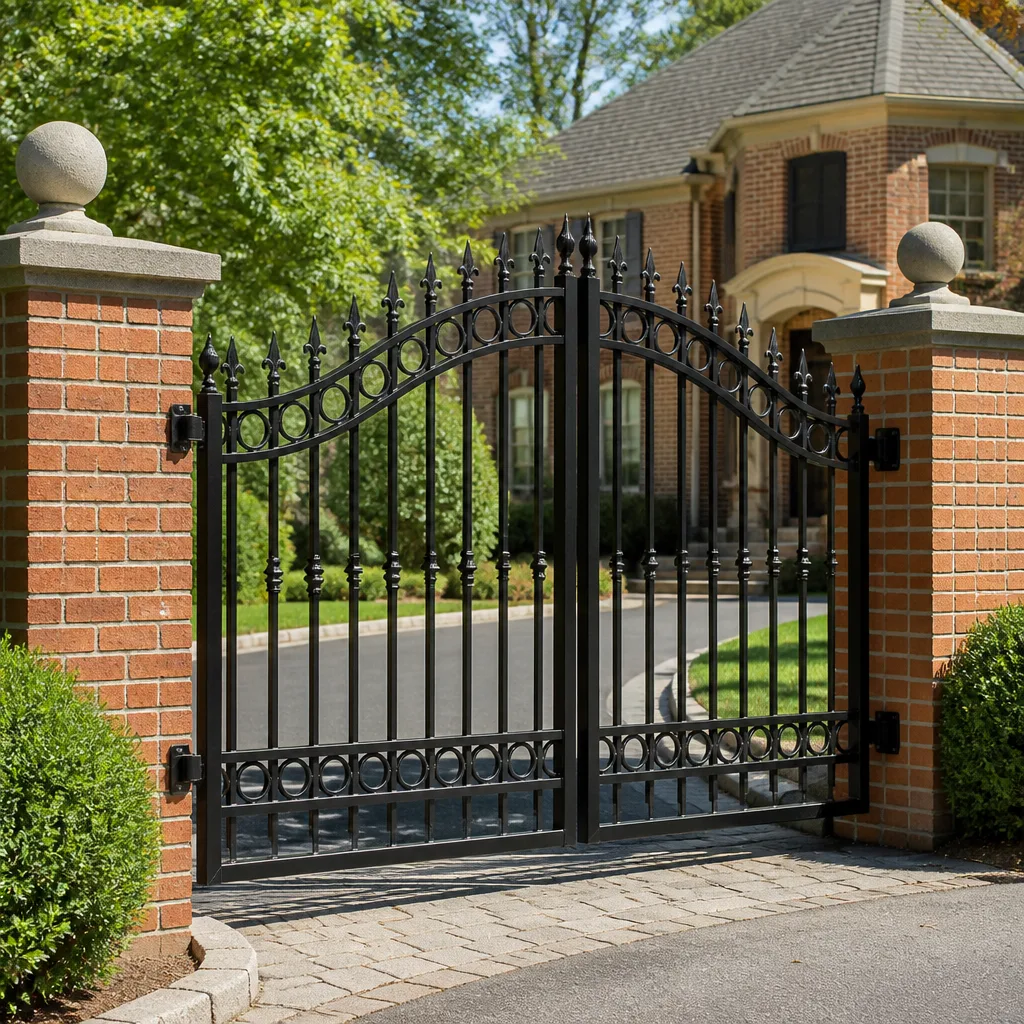
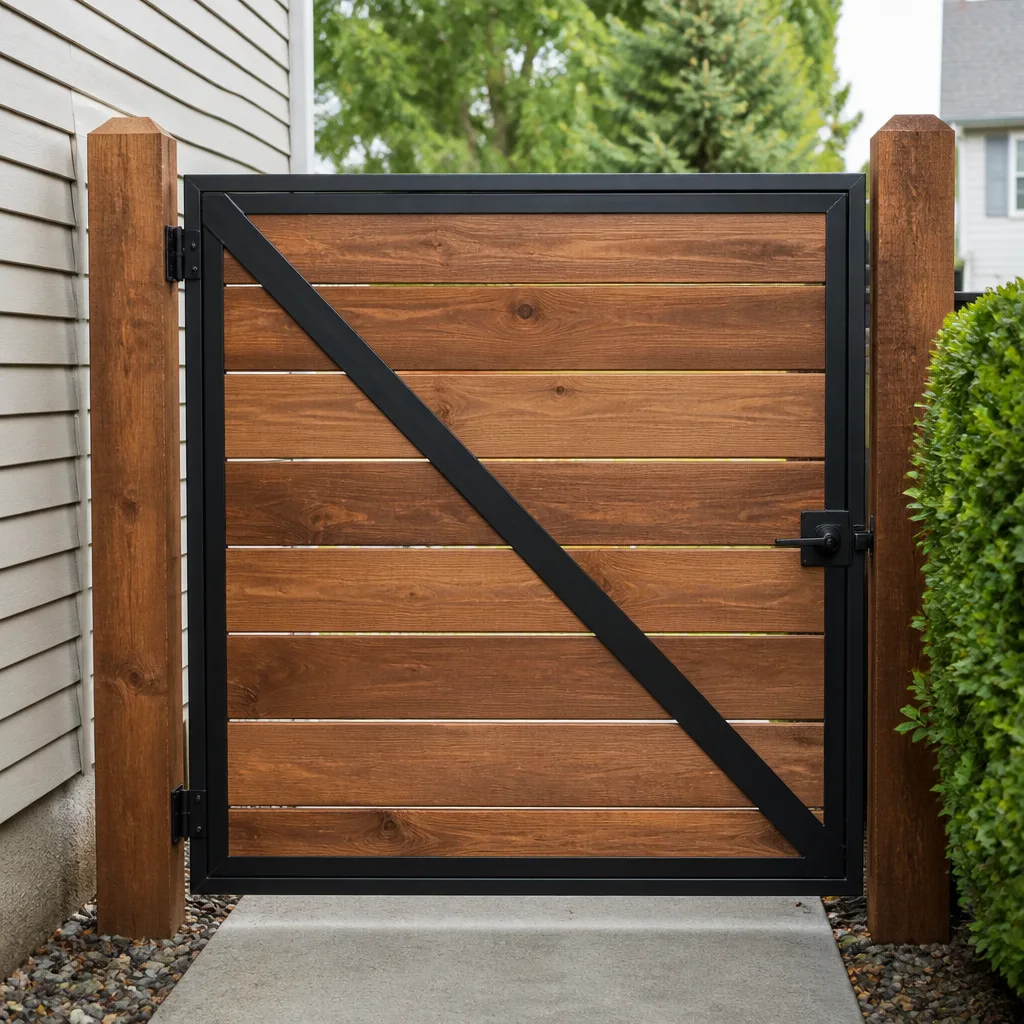
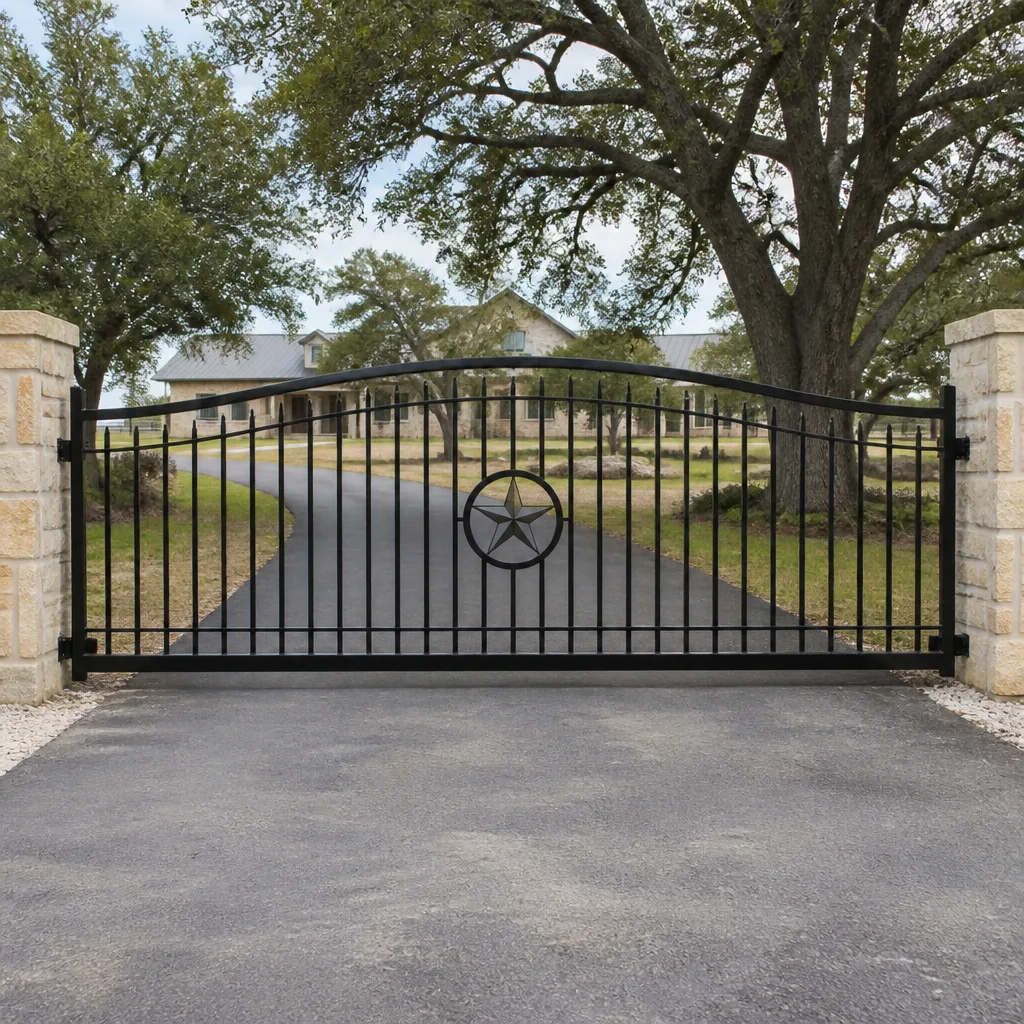
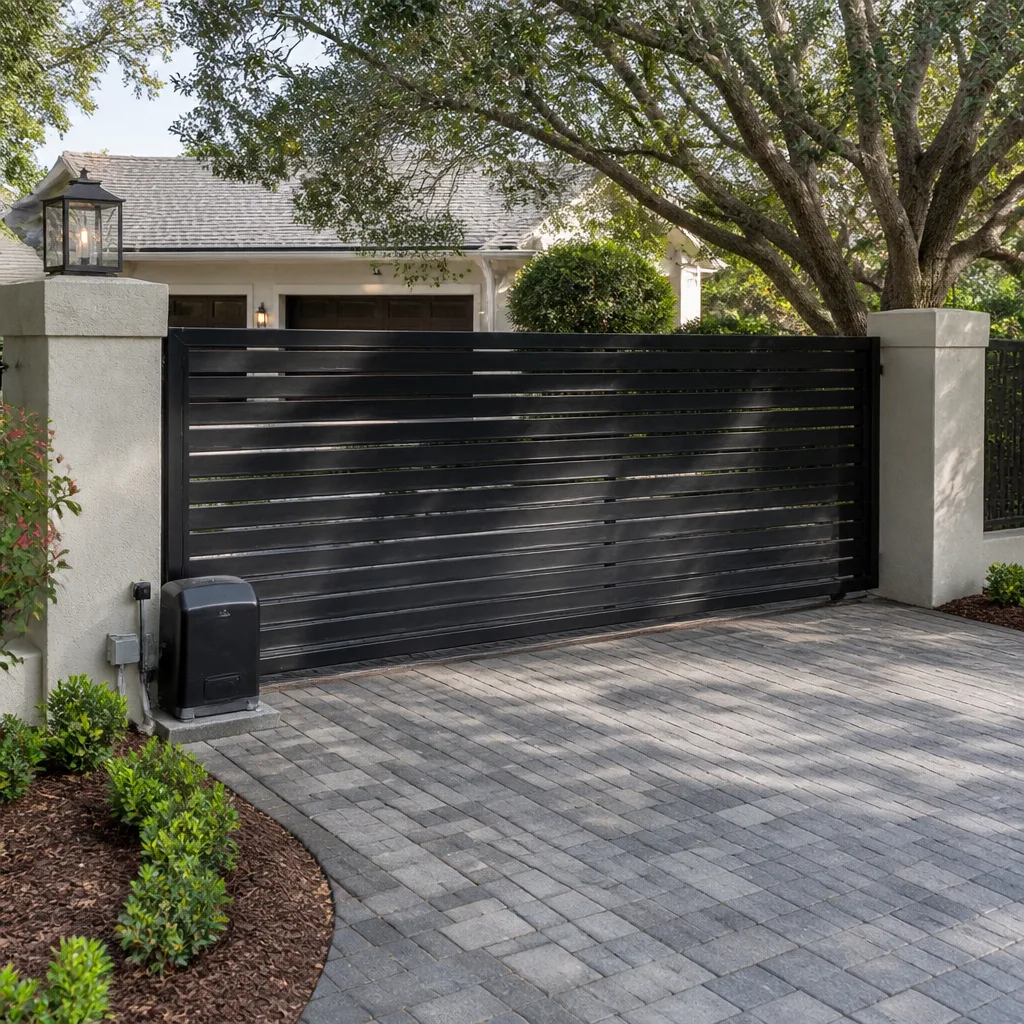
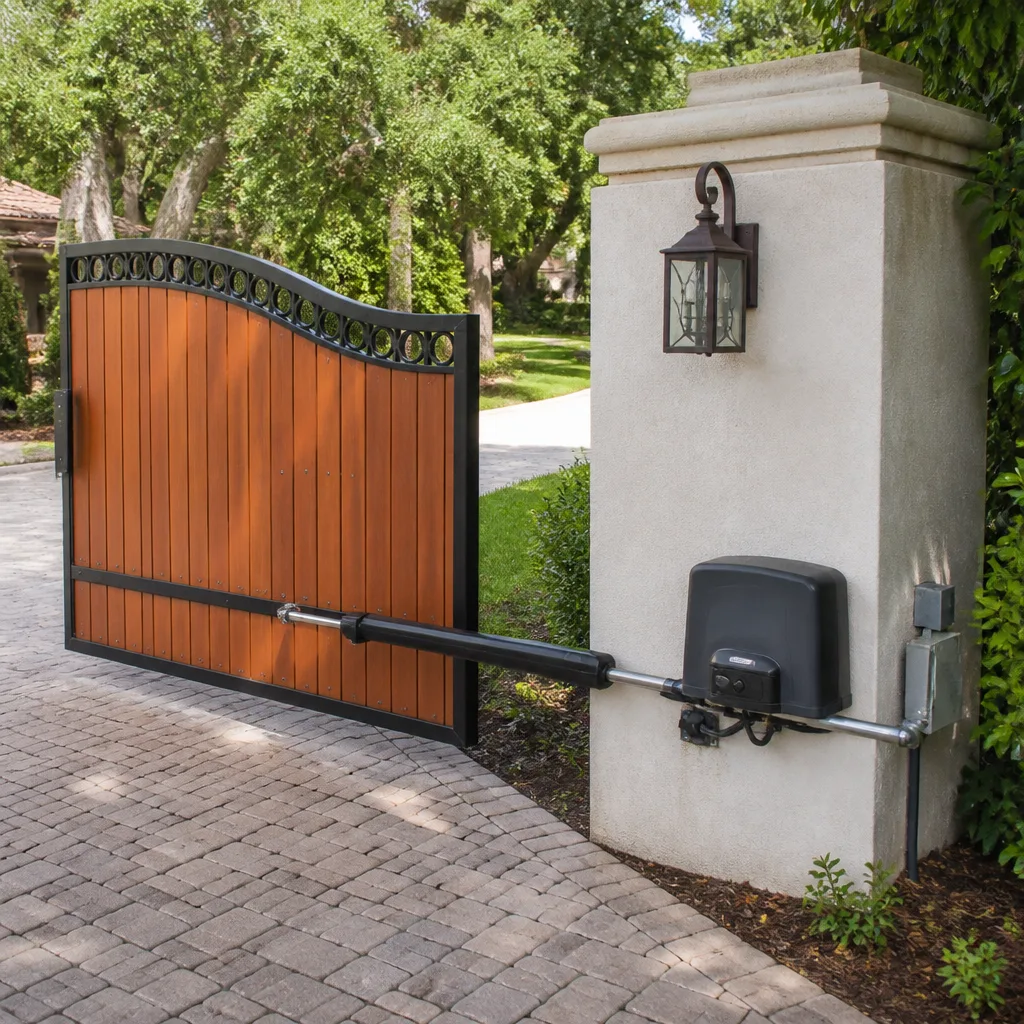
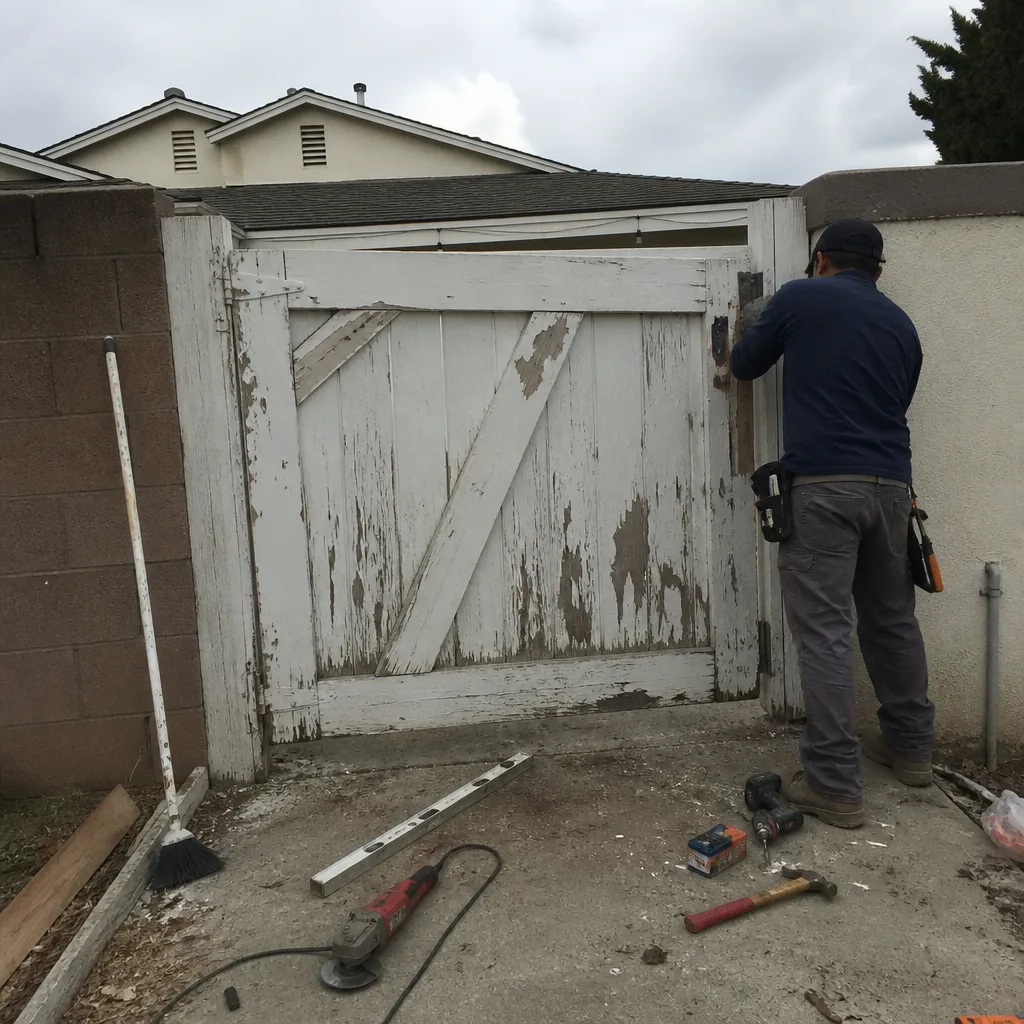 Before
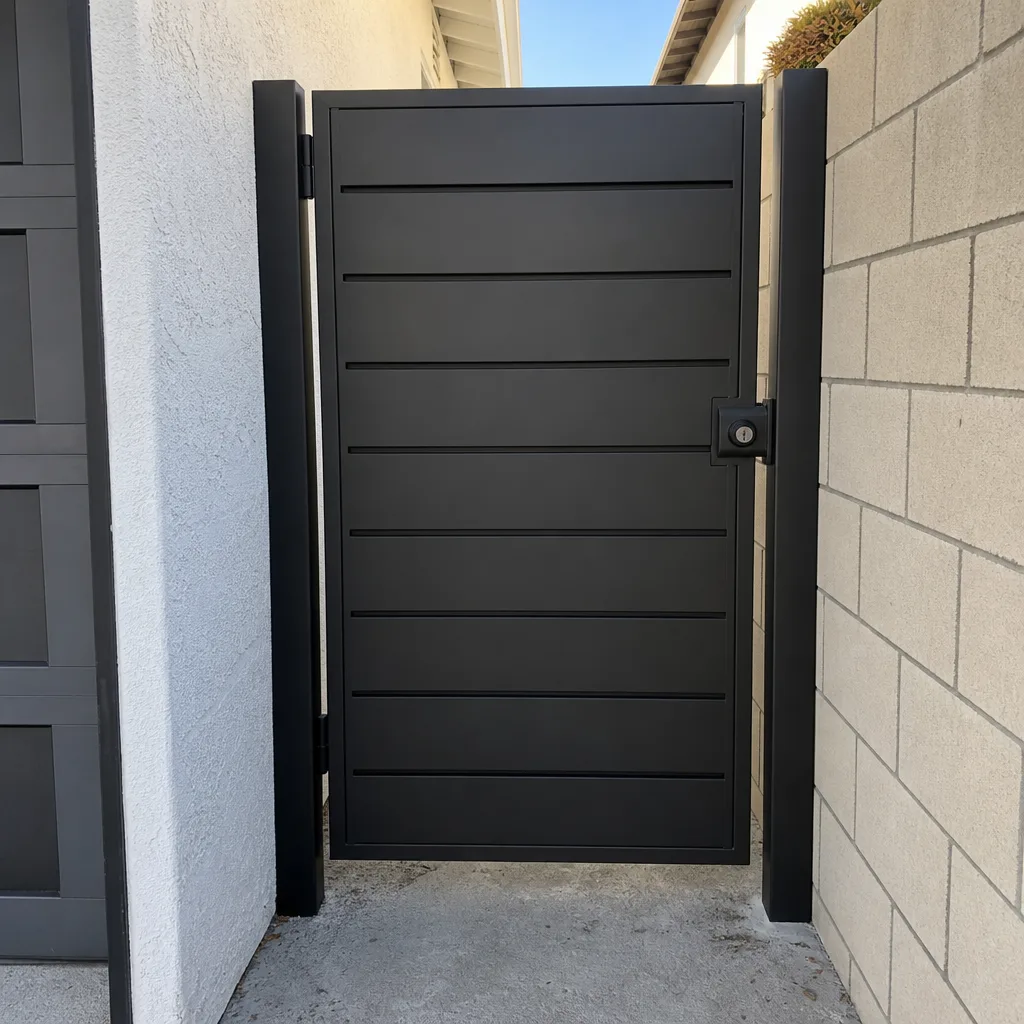 After
After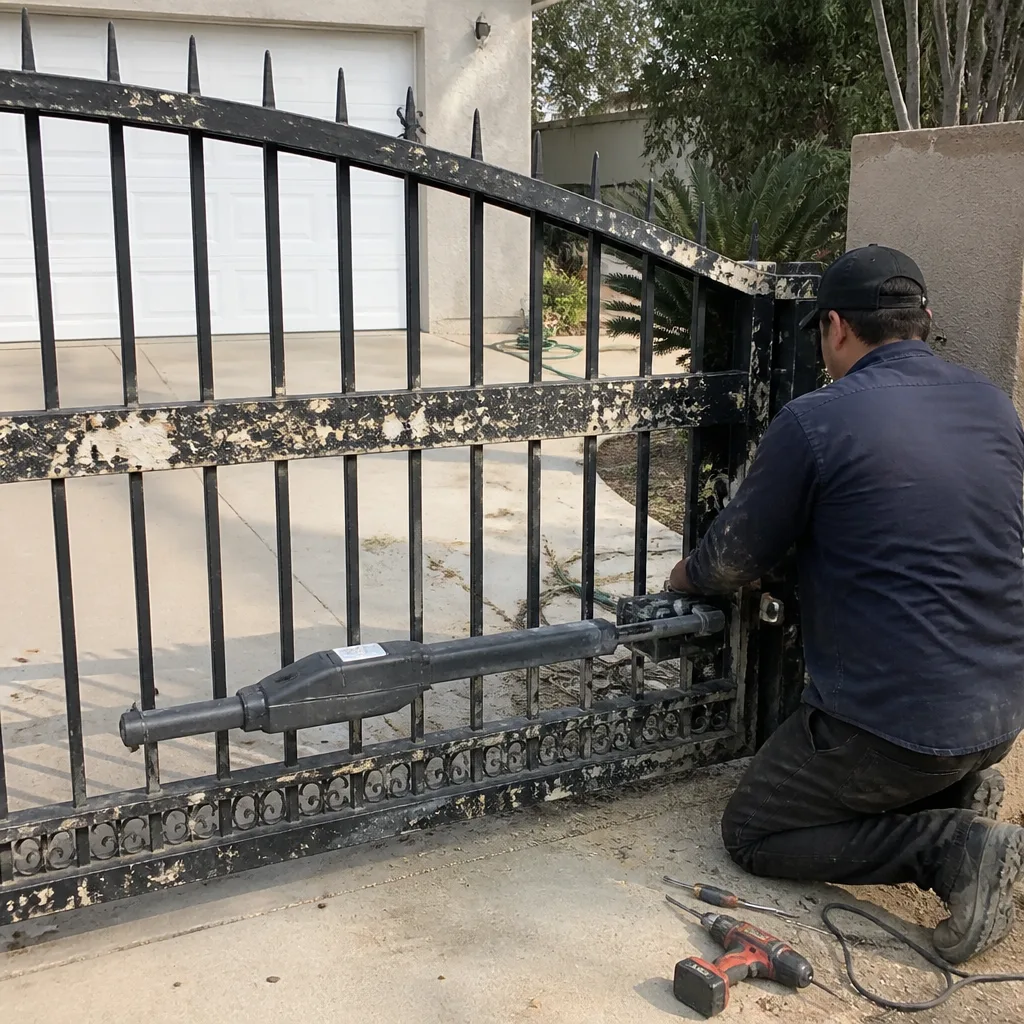 Before
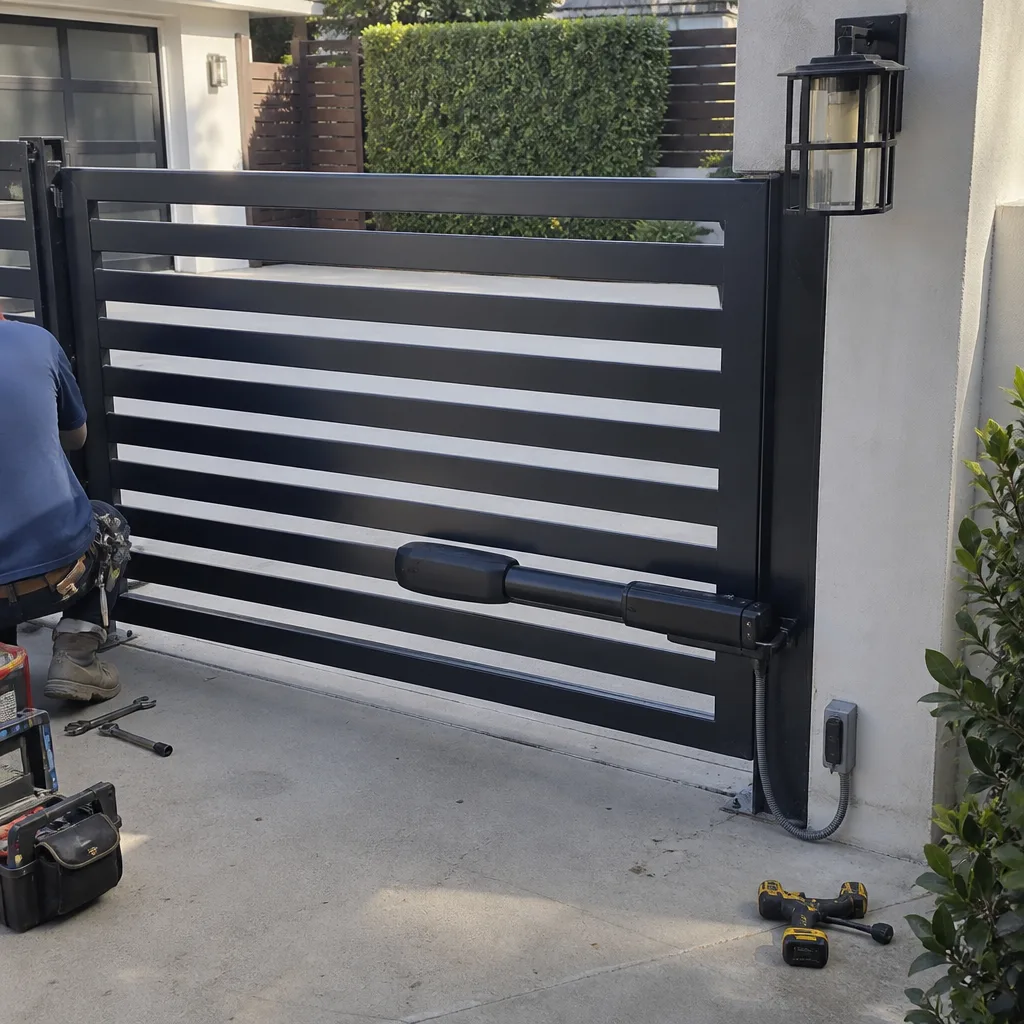 After
After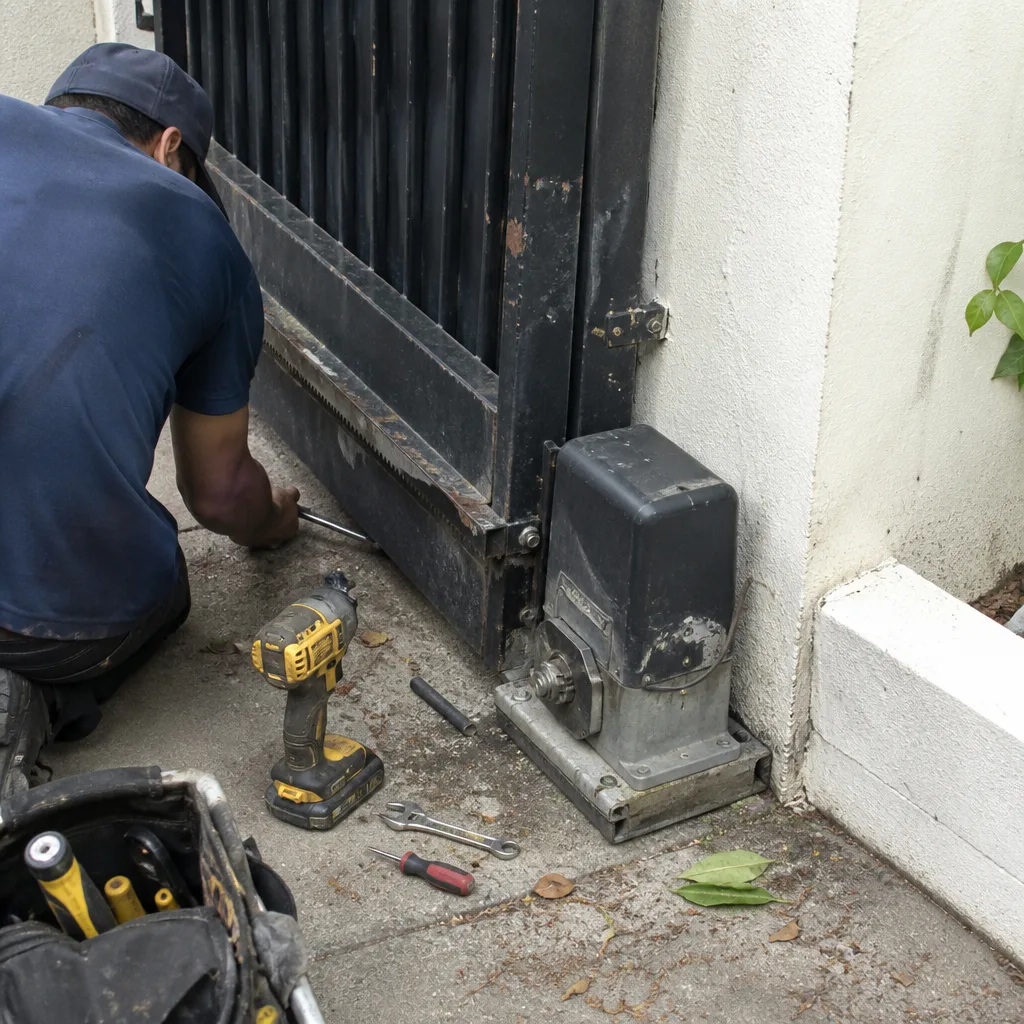 Before
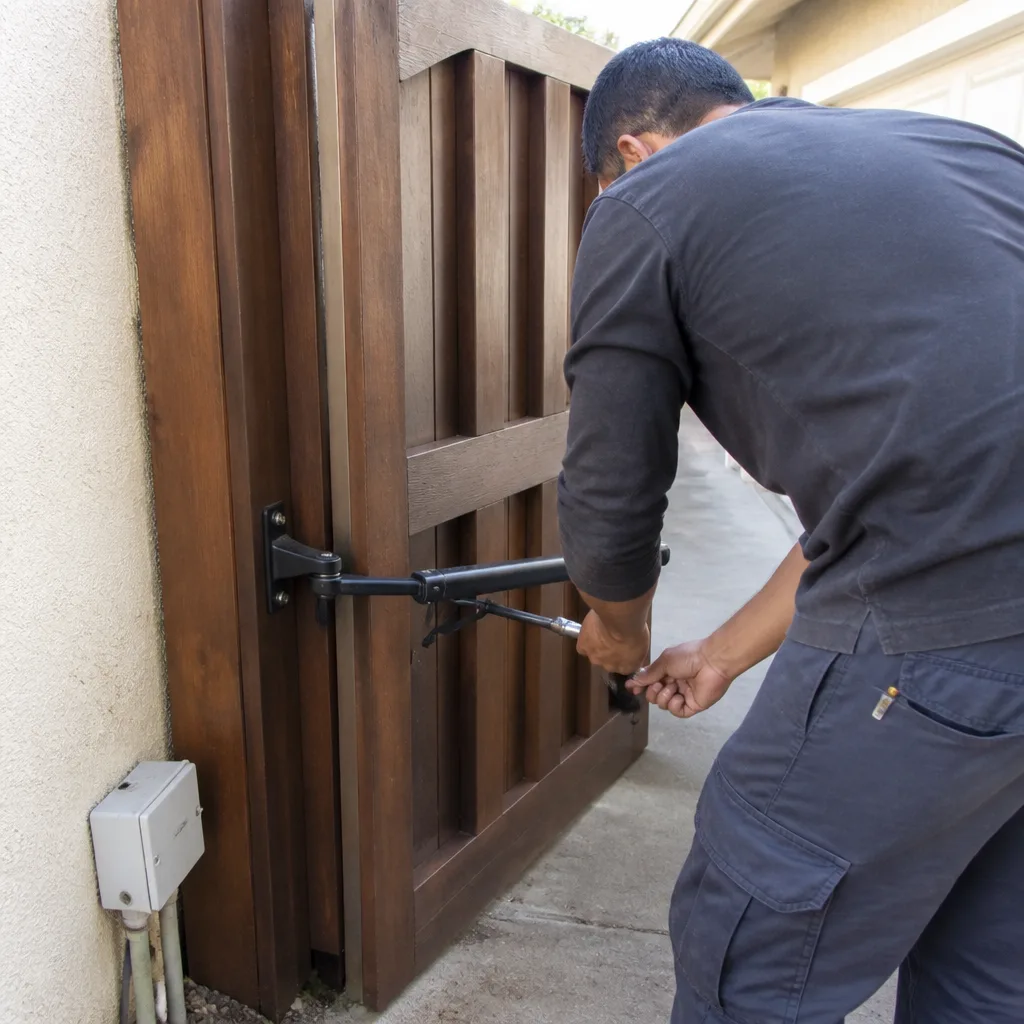 After
AfterThe Complete Guide to Gate Repair in Costa Mesa
Most driveway gates in Costa Mesa fail for the same three reasons: salt air corrosion on the hinges, low-voltage wiring that has baked in the Southern California sun, and opener motors that were never sized correctly for the weight of the gate they’re pushing. A gate that has worked for fifteen years rarely fails all at once. It fails in stages. This guide explains how to spot those stages early, what repairs actually cost in Costa Mesa, and when a fix is worth doing versus when replacement makes more sense. You’ll learn what to check before you call anyone, what questions to ask any gate repair company, and how to avoid paying for work your gate doesn’t need.
Quick Answer
Gate repair in Costa Mesa typically runs $180 to $650 for most hinge, wheel, sensor, and opener issues, while full opener replacement generally falls between $900 and $2,800 depending on the gate’s weight and length. Most repairs take one visit of two to four hours, and the biggest factor in cost is whether the gate itself is still square or has sagged over time. A gate that won’t open is almost never a lost cause; it’s usually a bad capacitor, a dead battery in the keypad, or a hinge that has finally given up after decades of coastal weather.
Table of Contents
- How Gates Fail in Costa Mesa
- What Gate Repair Costs in Costa Mesa
- Common Gate Problems and What They Mean
- DIY Checks Before You Call a Gate Repair Company
- Gate Opener Repair vs. Replacement: How to Decide
- Choosing a Gate Repair Company in Costa Mesa
- How Long Should a Gate Repair Last?
- Common Mistakes to Avoid
- When to Call a Professional
- Frequently Asked Questions
- The Bottom Line
How Gates Fail in Costa Mesa
Costa Mesa sits three miles from the Pacific, and the marine layer that rolls in most nights carries salt. That salt settles on hinges, rails, welds, and opener arms. Over years, it works its way into anything that moves. A hinge that looks fine from the outside may be rusting from the inside out, especially on older steel gates that were never primed and sealed properly. This is the most common failure we see in Costa Mesa neighborhoods like Mesa Verde and College Park: hinge pins that bind, then seize, then snap.
The second factor is heat. Costa Mesa’s inland pockets regularly see summer days above 90 degrees. Gate opener circuit boards expand and contract with those temperature swings. Capacitors, the component that gives the motor its starting kick, are particularly vulnerable. A capacitor that worked fine in May can fail on a hot August afternoon, and the gate simply stops reacting. Add in the occasional Santa Ana wind event, which can push a lightweight ornamental gate off its track, and you have the full picture of gate life in this city.
A third factor is the gate itself, specifically its weight. Many Costa Mesa homes built in the 1960s and 1970s came with solid wood or wrought-iron gates hung on two hinges. Those gates were fine when they were new. But wood absorbs moisture from the marine layer. Iron rusts. Both gain weight over time. Eventually the opener motor, which was selected for the original weight, has to work harder and harder until it burns out its own gears. In our experience, when a gate opener in Costa Mesa fails, the cause is often not the motor but the gate it’s pushing.
Understanding why gates fail matters because it changes the repair. A hinge replacement on a sagging gate without addressing the sag is a temporary patch. A new opener on a gate that has gained fifty pounds of water weight is a future failure waiting to happen. The repair has to match the cause, not just the symptom.
What Gate Repair Costs in Costa Mesa
Gate repair pricing in Costa Mesa depends on the type of repair, the weight and material of the gate, and whether any parts need to be ordered. Below are the ranges we quote most often, based on the Costa Mesa market. Every price is quoted and agreed upon before any work begins, so you’ll never see a surprise on the bill.
- Hinge replacement (per hinge): $85 to $240. Steel hinges cost less than brass or iron hinges sized for heavy estate gates. Most Costa Mesa repair calls involve one or two hinges.
- Gate wheel or roller replacement: $60 to $180. This includes removing the old wheel, installing the new one, and setting the gate height so it swings or slides smoothly.
- Welding repair (cracked joint or broken picket): $150 to $500. Pricing depends on how much grinding and repainting is needed after the weld.
- Opener capacitor replacement: $120 to $220. A straightforward fix for a motor that hums but doesn’t move. This is one of the most common repairs in Costa Mesa during summer heat spikes.
- Opener control board replacement: $280 to $650. This applies to brands like DoorKing, Elite, Ghost Controls, and Mighty Mule. Some boards run higher if the opener model is older and parts are scarce.
- Keypad or remote programming: $75 to $140 per visit. Includes clearing old codes, adding new codes, and testing the receiver.
- Full opener replacement (motor, arm, receiver, installation): $900 to $2,800. The spread depends on gate weight, opener brand, and whether the gate is swing or slide.
- Gate realignment and track repair: $200 to $600. Includes adjusting the gate level, rebuilding track supports, and lubricating moving parts.
Two things drive cost more than any other: gate weight and gate condition. A light aluminum gate with a functioning opener needs a simple fix. A heavy iron gate that has sagged two inches needs the sag corrected first or every subsequent repair will fail prematurely. Always ask the repair company whether the price includes correcting the underlying cause, or just replacing the broken part. A lower price that doesn’t address the cause is not a better deal.
If you have a written estimate from another Costa Mesa gate company, we offer a free second opinion. You can call (213) 754-8947, send us a photo of the estimate, and we’ll tell you honestly whether the work described and the price quoted are reasonable for your gate.
Common Gate Problems and What They Mean
Every gate problem has a cause. Learning to read the symptom saves time and money. Here are the six problems we see most often in Costa Mesa and what each one usually means.
1. The gate hums but doesn’t move
This is almost always a failed capacitor. The motor is getting power and the windings are trying to engage, but the capacitor that provides the initial voltage kick is dead. A capacitor replacement is a simple repair on most openers. On some older DoorKing and Elite models, the capacitor is soldered to the board, which means the whole board gets replaced. The fix is still routine, but the cost goes from under $200 to over $400.
2. The gate opens fine but won’t close (or closes but won’t open)
This points to one of three things: a misaligned photo-eye sensor, a limit switch that has drifted out of position, or a low-voltage wiring fault. Photo-eye sensors are the most common culprit, especially in Costa Mesa where wind and passing cars can nudge the sensor bracket out of alignment. Cleaning the sensor lens and re-aiming it solves about half of these calls over the phone. If that doesn’t work, the limit switch or wiring needs testing with a multimeter.
3. The gate moves slowly or stops halfway
A slowing gate is usually a struggling motor. The cause could be a hinge that has started to bind, a wheel that isn’t rolling freely, or a motor that is underpowered for the gate’s weight. When we see this in Costa Mesa, we check the mechanical parts first. If the gate moves freely by hand (in manual mode), the motor is the problem. If it drags by hand, the motor is fine and the mechanics need work.
4. The remote works only at close range
Weak remote range almost always means the receiver antenna is broken, bent, or trapped inside a metal enclosure. Sometimes it’s a failing battery in the remote itself. We start with the cheapest fix: replace the remote battery. If that doesn’t do it, the antenna needs to be extended or relocated, which takes about twenty minutes.
5. The keypad works sometimes
Intermittent keypad function in Costa Mesa is usually moisture. The marine layer introduces condensation, and keypads without a weather seal develop corrosion on the button contacts. If the keypad is older than seven or eight years, the most cost-effective fix is replacing it. New keypads run $80 to $240 and are fully weather-rated.
6. The gate is crooked or dragging on the ground
A dragging gate means a hinge or wheel has failed. On swing gates, the top hinge takes almost all the load, and when it wears, the gate drops. For a slide gate, the rollers under the gate either wear flat or the track has settled. This is a mechanical repair, not an electrical one, and it needs to be fixed before the gate damages the opener or the adjacent fence.
DIY Checks Before You Call a Gate Repair Company
Before you call anyone, there are several checks you can do in ten minutes that will save you time on the phone and potentially save you a service visit. These steps are safe. None of them involve opening a motor housing or touching line voltage.
- Check the power source. Gate openers plug into a standard outlet or are hardwired to a circuit. Check that the outlet has power by plugging in something else, like a phone charger. Check that no GFCI outlet has tripped. If the opener runs on a battery backup, check whether the battery status light is on.
- Check the remote battery. Replace the battery in the remote, even if the light on the remote still blinks. A weak battery can blink but not transmit strongly enough to trigger the receiver.
- Check the keypad buttons. If keys are sticky or unresponsive, the keypad itself is likely failing, not the opener. If the keypad lights up but the gate doesn’t move, the issue is between the keypad and the receiver.
- Check the photo-eye sensors. Look for the two sensors on either side of the gate opening, near the ground. Make sure both lenses are clean and that nothing is blocking the beam path. If a sensor bracket is bent, gently push it back so the lights on both sensors are solid.
- Put the opener in manual mode. Most openers have a release handle or lever on the motor or arm. Pull it and try to move the gate by hand. If the gate swings or slides freely, the mechanical parts are fine and the problem is electrical. If the gate drags or won’t budge, the problem is mechanical and a technician needs to see it.
- Look at the gate hinges. Get down low and examine where the gate connects to the post. If there is rust powder below the hinge, or if the gate shifts when you lift it, the hinge is failing. This is a safety issue, especially on heavy gates.
The gate opener itself, the wiring, and the circuit board should be left to a trained technician. The capacitor inside an opener stores voltage even when the power is disconnected, and a person can be injured. The same applies to the high-tension springs used as safety features on some slide gates. These are not DIY parts. A professional repair protects both the gate and the person working on it.
Gate Opener Repair vs. Replacement: How to Decide
When an opener fails, you have two choices: repair the existing unit or replace it. The decision comes down to three questions: how old is the opener, what failed, and is the opener still correctly sized for the gate. Answering these honestly saves money in the long run.
Age of the opener: Most residential gate openers last 10 to 15 years in Costa Mesa. If the opener is older than that and the control board has failed, replacement is usually the better move. The new board may cost $500, and then six months later the motor bearings go and you’re in another $400. At some point, rebuilding an old opener costs more than installing a new one.
What failed: Some failures are isolated and cheap. A bad capacitor, a broken gear, a worn limit switch – these are $120 to $300 fixes on a healthy opener. If the failure is isolated and the opener is under 12 years old, repair makes sense. If the failure is the board on a 15-year-old opener, replacement starts looking better.
Gate weight and opener sizing: Many Costa Mesa gates were installed decades ago with the smallest opener that would fit the budget. As the gate ages and gains weight, that opener works harder. If your opener has burned out a gear or tripped its thermal overload more than once, the opener may be undersized. In that case, replacing it with a properly sized unit from Ghost Controls, Mighty Mule, DoorKing, or Elite is the correct fix, not another repair.
Our rule of thumb
If the opener is under 8 years old and failed in one isolated way, repair it. If the opener is over 12 years old, or if it has failed twice in the last three years, or if the gate is heavier than it was when the opener was installed, replace it. This rule, applied consistently, saves the average Costa Mesa homeowner between $400 and $1,200 over five years versus repeated patch repairs on a failing unit.
Choosing a Gate Repair Company in Costa Mesa
Costa Mesa has no shortage of handyman services and general contractors who will take a gate job. The questions below separate a gate specialist from a generalist. We recommend asking all of them before you sign anything.
- Do you work on my opener brand? Gate openers are not interchangeable. A technician who works on LiftMaster all day may not know the FAAC board architecture or the BFT limit-switch procedure. Ask specifically about your brand, whether it’s Ghost Controls, DoorKing, Elite, Mighty Mule, or something else. If the answer is “I can figure it out,” that’s a red flag.
- Can you weld on site? Wrought-iron and steel gates often need welding repairs, not just bolt-on parts. A company that can’t weld will replace the whole gate section instead of repairing the cracked joint. Welding on site saves you hundreds.
- Do you quote the price before starting? The price should be set before a single bolt is turned. If a company wants to “see how it goes” and charge by the hour without a cap, you’re taking on all the risk. Any reputable Costa Mesa gate company quotes upfront.
- What is your guarantee? We stand behind every completed job with our 90-Day Done Right Promise, in writing. If it’s not right, we come back and make it right, no hassle and no arguing. Every gate company should be able to state its guarantee in one sentence. If they can’t, that tells you something.
- Do you have someone I can talk to? A live person answers our phone 24 hours a day, 7 days a week. No voicemail trees, no answering service, no “leave a message and we’ll get back to you.” If you call a gate company and can’t reach a human, consider what happens when there’s a problem at 9 p.m.
- Are your technicians background-checked? Gate work happens at your home, often involving access to your driveway, your control systems, and your family’s entry codes. Uniformed, background-checked technicians should be the standard, not the exception.
We’ve been doing gate work in Orange County for over 42 years, and our founder still sets the standard on every job. The company that makes a 40-year-old gate close like the day it was hung is the company you want on your driveway. Visit our Ironworks Gate Co. home page to learn more about how we work.
How Long Should a Gate Repair Last?
A proper gate repair should last years, not months. Here are the realistic service lives for common repairs in Costa Mesa’s coastal climate, assuming the work is done correctly and on a gate that is structurally sound.
- Welded repair on a cast-iron or steel gate: A clean weld on properly prepared metal, primed and painted, should last 10 to 20 years. The paint may need touching up sooner, but the weld itself should outlast the rest of the gate.
- Hinge replacement: A properly installed brass or stainless-steel hinge on a balanced gate should last 8 to 15 years in Costa Mesa. Steel hinges last less time near the coast, typically 5 to 8 years, before surface rust requires attention.
- Opener capacitor replacement: A new capacitor should last 5 to 10 years. If a capacitor fails within a year, something else is wrong, usually a motor drawing more current than it should.
- Control board replacement: A new board should last 10 to 15 years, which is the lifespan of most garage and gate opener electronics. Heat and moisture are the enemies; a well-ventilated opener housing extends board life.
- Photo-eye sensor replacement: New sensors should last 8 to 12 years. They fail most often when they get hit by cars or yard equipment, or when water gets inside the housing.
- Full opener replacement: A quality opener sized correctly for the gate should last 10 to 15 years in Costa Mesa with proper maintenance. The annual $89 Seasonal Tune-Up we offer covers lubrication, limit-switch checks, sensor alignment, and bolt tightening, which is the maintenance most openers never get.
The biggest factor in repair longevity is whether the underlying mechanical issue was addressed. A hinge replaced on a gate that still binds at the latch will wear out prematurely. An opener capacitor replaced on a motor that is overheating will fail again. The repair has to fix the cause or it isn’t a repair, it’s a patch. Our 90-Day Done Right Promise exists for exactly this reason: if the work we did isn’t holding up, we come back. But a proper diagnosis prevents most callbacks before they happen.
Common Mistakes to Avoid
- Replacing the opener without checking the gate’s mechanical condition. If the hinges are worn or the gate has sagged, a new opener will struggle from day one. The mechanics come first, then the motor. Our technicians inspect the gate before recommending any opener work.
- Lubricating hinges without cleaning them first. Spraying lubricant over accumulated rust and grit creates a grinding paste that accelerates wear. The hinge needs to be brushed clean first, then lubricated with the right product for the metal.
- Buying the cheapest opener and expecting it to last. A cheap opener on a heavy gate in Costa Mesa’s coastal air will fail early. You’ll pay more in replacement costs within five years than you would have paid for a quality unit upfront.
- Ignoring a slowing gate. A gate that moves slower than it used to is telling you something. Ignoring it for six months usually turns a $200 repair into an $800 repair or a full opener replacement.
- Replacing a keypad before checking the receiver. If the keypad is flashing but the gate doesn’t respond, the problem may be the receiver, not the keypad. Replacing the keypad first wastes money. A correct diagnosis starts with checking both ends of the signal.
- Using a generalist handyman for welding work. Gate welding requires the right rod, the right heat, and the right knowledge of how the gate’s load transfers. A poor weld can fail without warning, and a falling gate is dangerous. If your gate needs welding, use a company that welds gates specifically.
- Propping open a broken gate with a rock or block. A gate held open with an improvised prop can shift and close on a car or a person. If your gate won’t stay open on its own, fix the opener or the mechanical stop immediately. Don’t improvise.
When to Call a Professional
Some gate issues are safe to diagnose on your own. The actual repair work on motors, circuit boards, springs, and heavy metal is not. If your gate is dragging, won’t move, or has a visibly cracked weld, call a professional. If the opener hums but does not move, stop pressing the remote and call someone who can safely test the capacitor. If the gate has come off its track or is hanging at an angle, do not try to lift it back into place yourself. Gates are heavier than they look, and a gate that shifts while you’re under it can cause serious injury. Ironworks Gate Co. offers free estimates in Costa Mesa. Call (213) 754-8947 and a live person will answer, day or night.
Frequently Asked Questions
Most gate repairs in Costa Mesa cost between $180 and $650, with common fixes like hinge replacement, capacitor replacement, and sensor realignment falling in the $150 to $300 range. Full opener replacement runs $900 to $2,800 depending on gate weight and opener brand. Call (213) 754-8947 for an exact quote on your gate. Estimates are free, and every price is settled before work begins.
Most gate repairs are completed in a single visit, and our technicians carry the most common parts for DoorKing, Elite, Ghost Controls, and Mighty Mule openers on their trucks. If the repair needs a part we don’t have, we order it immediately and return as soon as it arrives. Call (213) 754-8947 to check same-day availability.
At 15 years old in Costa Mesa’s coastal climate, replacement is usually the better choice unless the failure is minor and isolated, like a capacitor. A 15-year-old board failure, a burned-out motor, or a second major repair in three years means the opener has reached the end of its useful life. A new opener sized correctly for your gate will cost more upfront but will save you $400 to $1,200 over five years compared to repeated patch repairs.
We are trained and equipped on nine major gate-automation brands, including DoorKing, Elite, Ghost Controls, Mighty Mule, LiftMaster, FAAC, BFT, Linear, and Viking. Whatever opener is on your Costa Mesa driveway, we can service it correctly on the first visit.
The 90-Day Done Right Promise is our written guarantee on every completed gate job. If the work we did isn’t right within 90 days, we come back and make it right. No paperwork, no arguing, no exceptions. It’s the standard we’ve applied to every job for over 42 years.
We offer a permanent 5% discount for seniors and veterans in Costa Mesa and throughout Orange County. We also offer $50 off any repair over $250, a free second opinion on any written estimate, and an $89 Seasonal Tune-Up. Call (213) 754-8947 and ask about any of these offers when you schedule.
The Bottom Line
Gate repair in Costa Mesa is a specialized trade, not a general handyman task. The coastal climate punishes cheap materials, and the weight of aging gates punishes undersized openers. The right repair starts with a correct diagnosis of the mechanical and electrical systems working together. It ends with a price agreed before the work begins and a written guarantee after it’s done. Whether you need a hinge replaced, a board diagnosed, or an opener replaced with something that will still be working in 2039, the gate you have is almost always worth fixing when the repair is done right. Call (213) 754-8947 for a free estimate. A live person answers, and the price is set before we touch a bolt.
Written by Victor Salinas, Owner at Ironworks Gate Co., serving Costa Mesa since 2013.