
Last updated August 25, 2026
Free on-site gate assessment - hinges, posts, and your LiftMaster or Nice gate operator checked before anything is quoted
The assessment is free and the quote is the invoice.
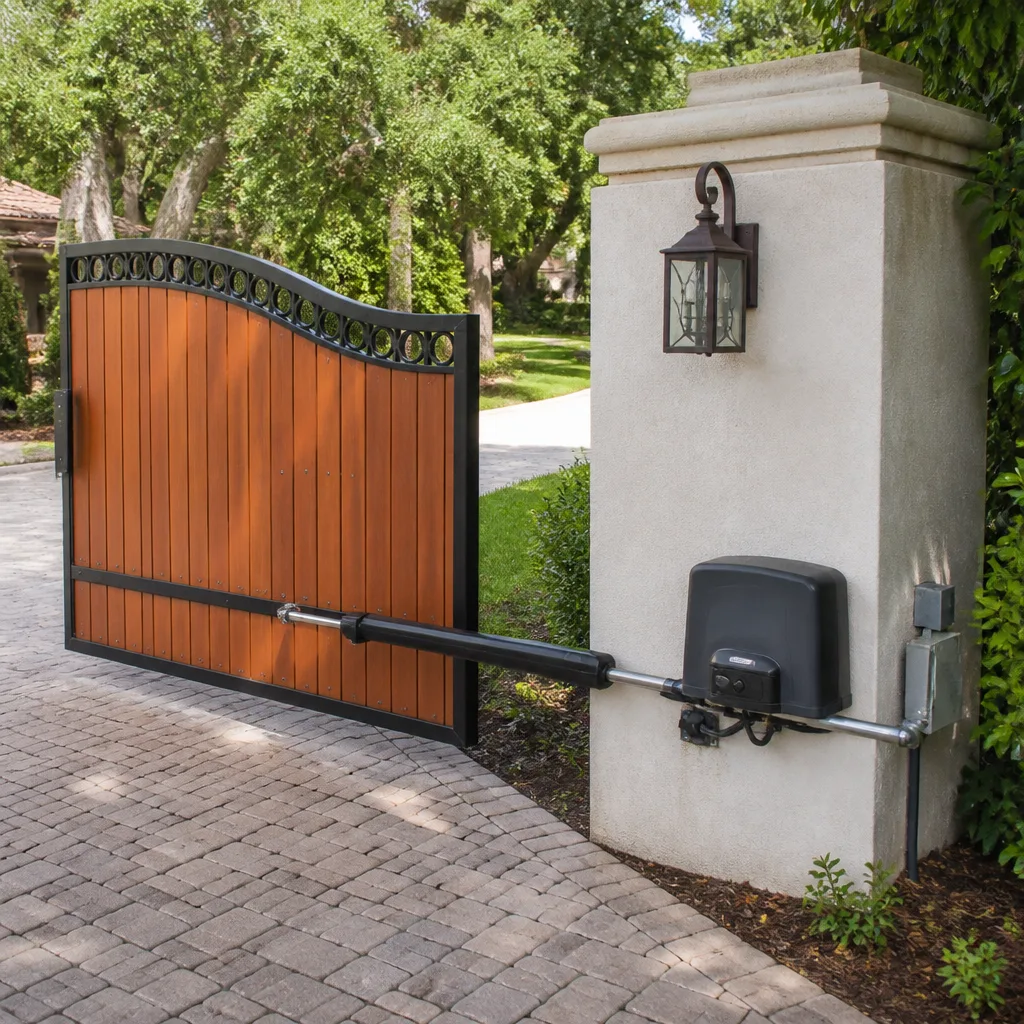
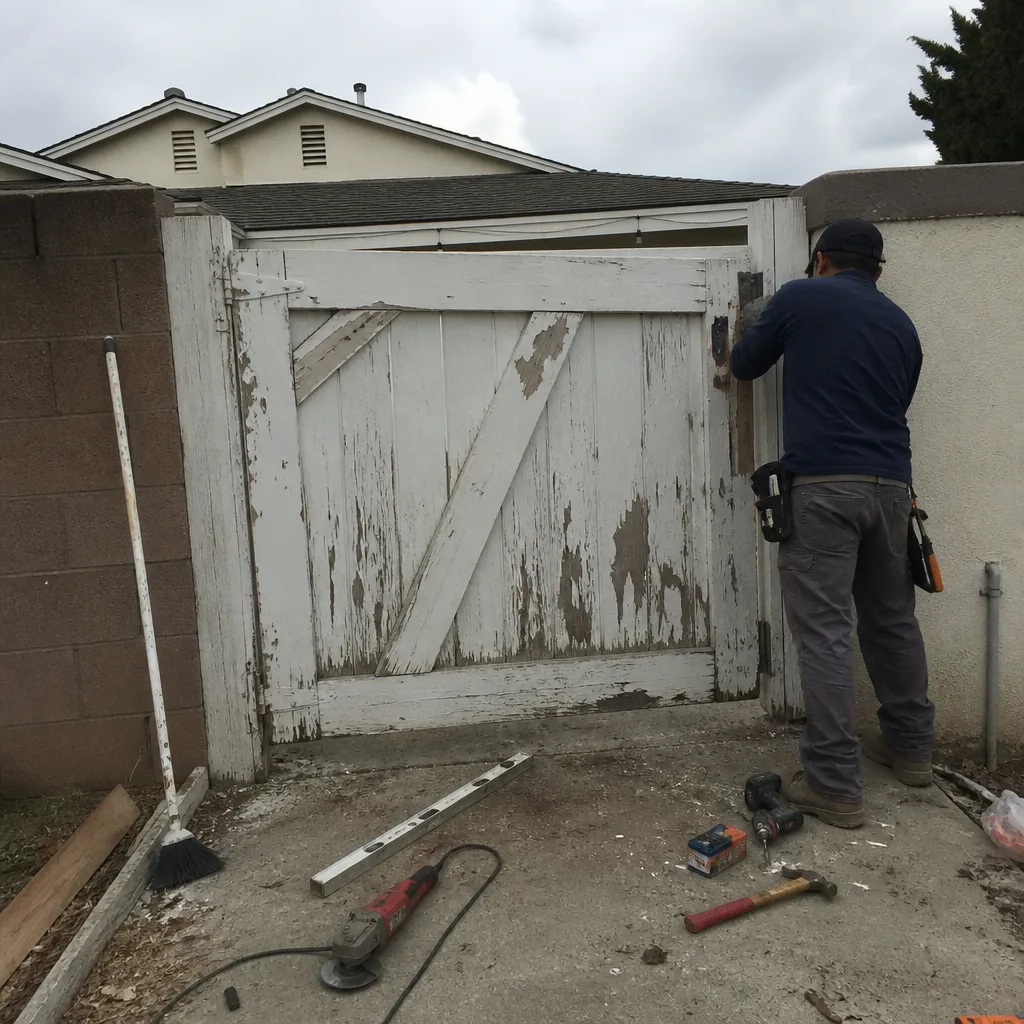 Before
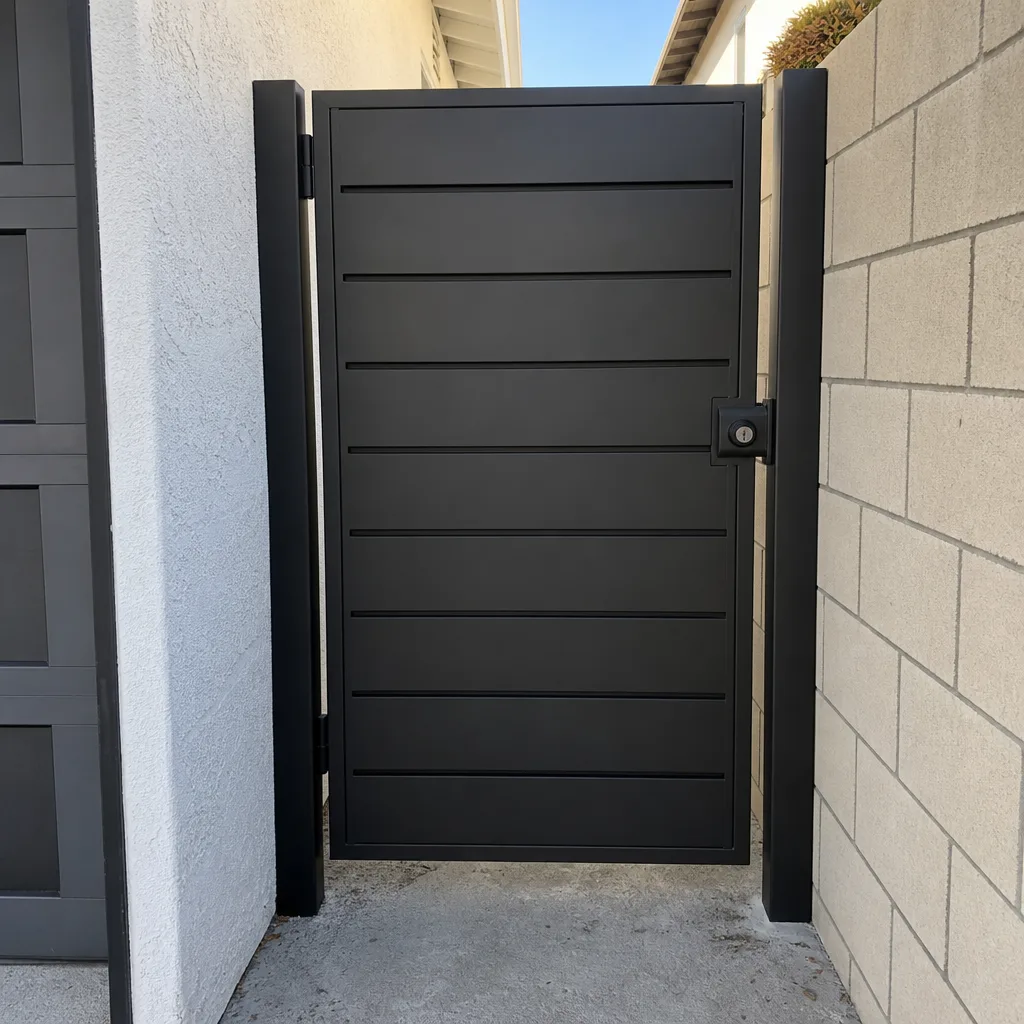 After
After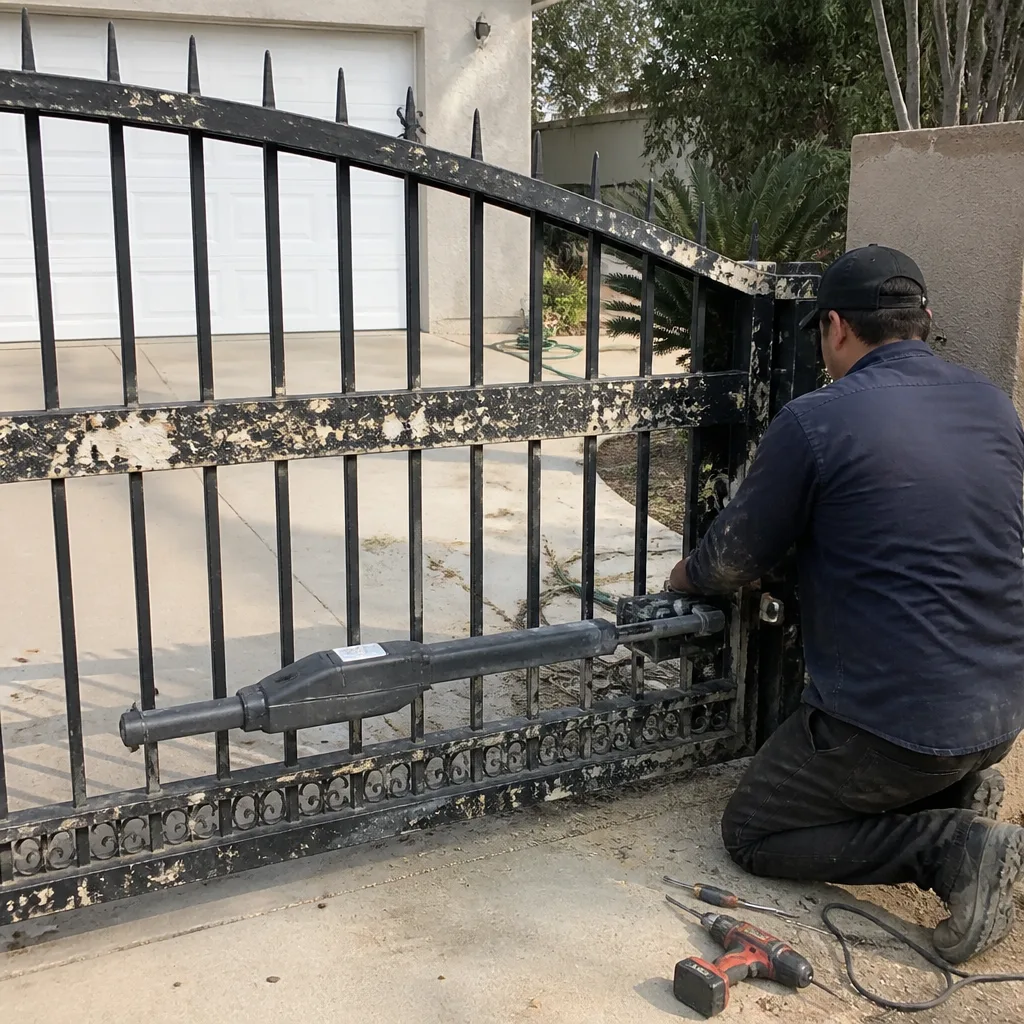 Before
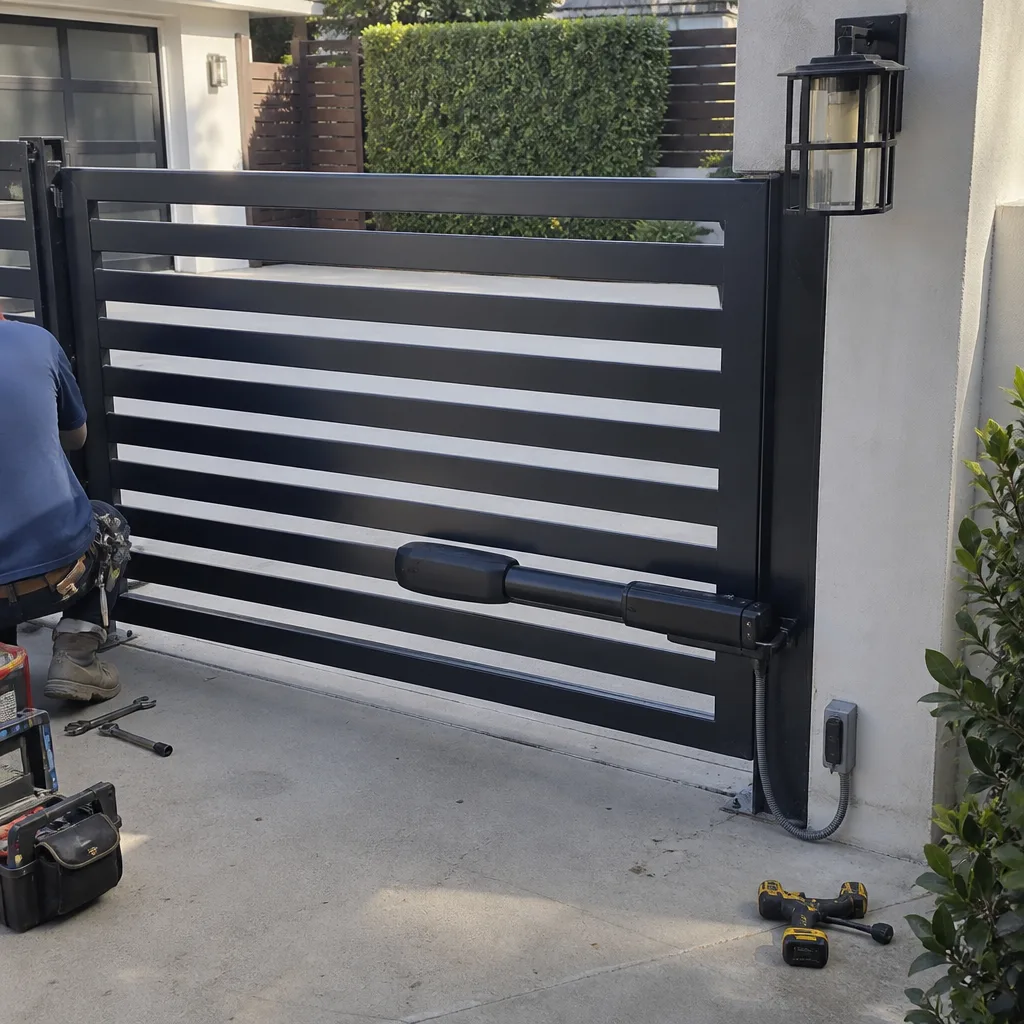 After
After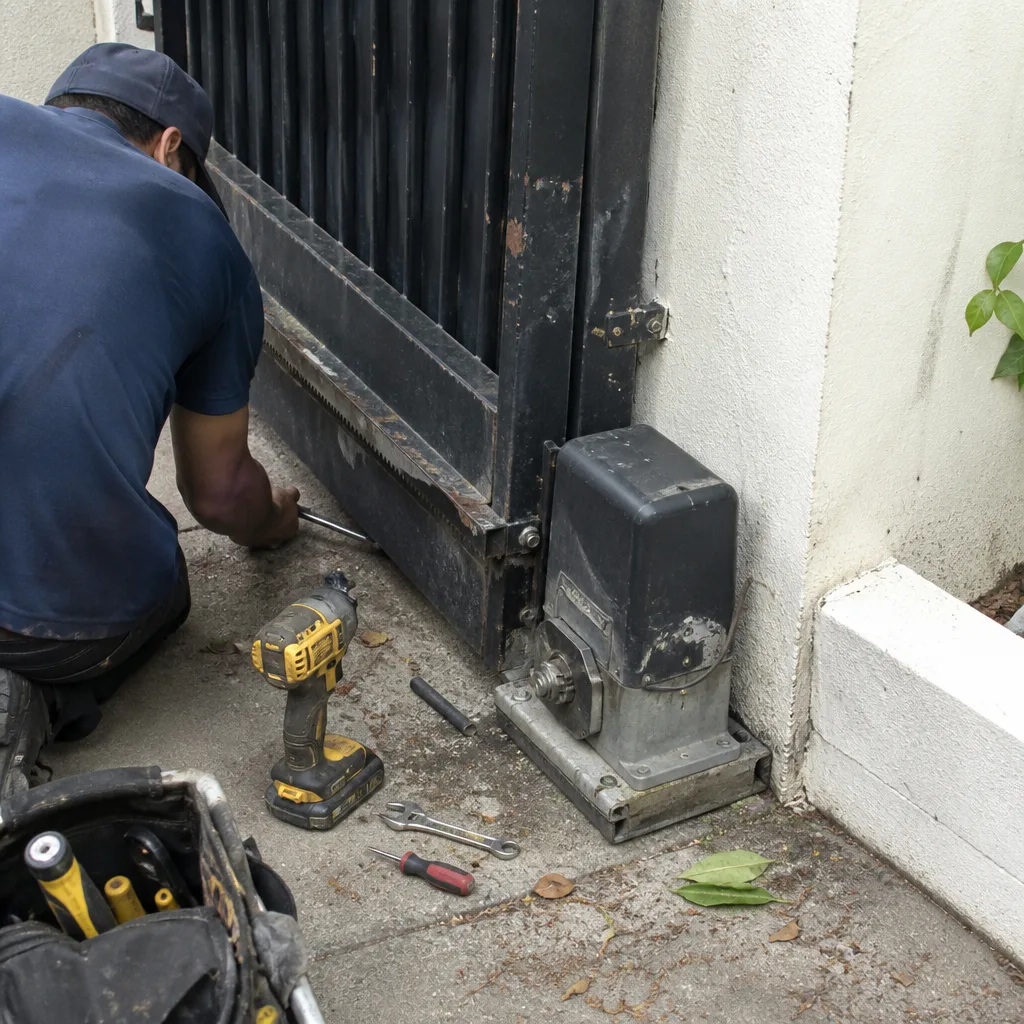 Before
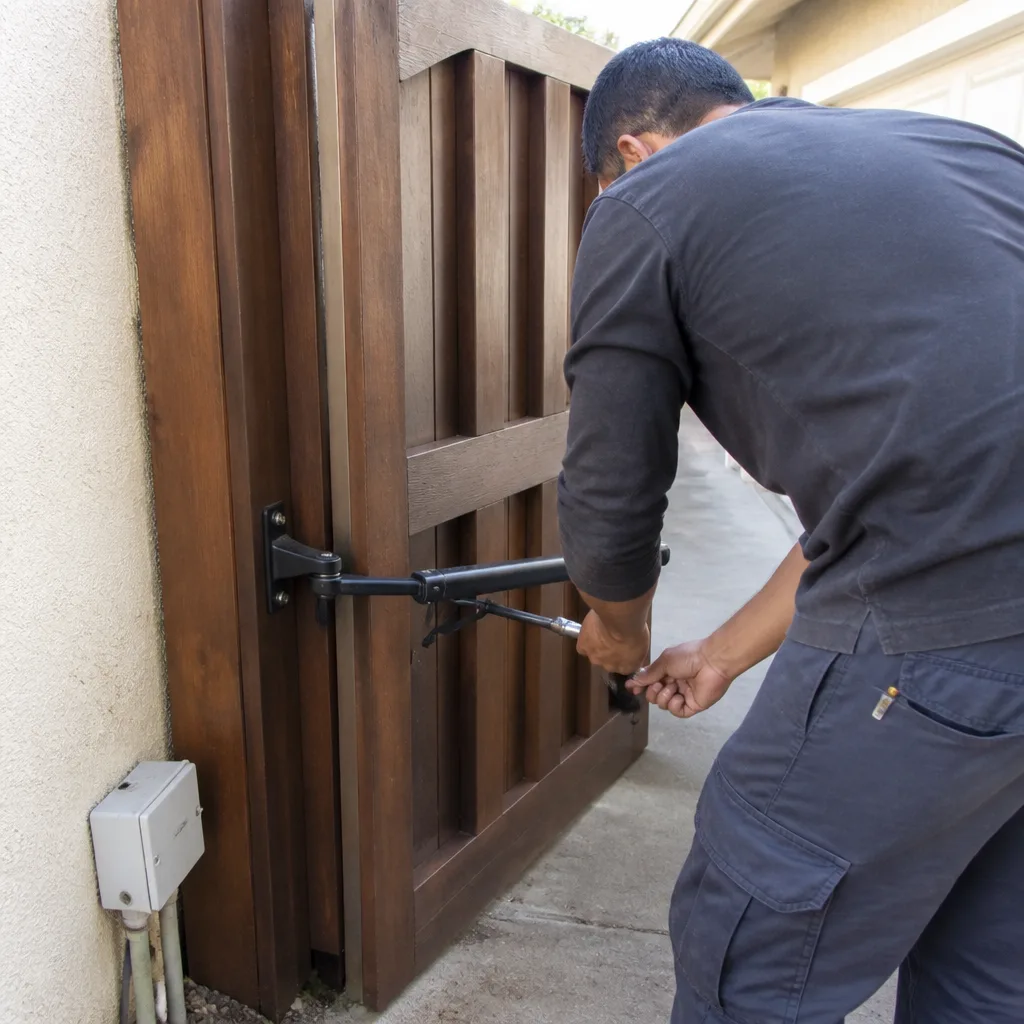 After
AfterGate Repair Permits, Codes & Inspections in CA: What You Need to Know
Most homeowners in California only think about gate permits after the inspector has already flagged them, and by then the fix costs twice as much as it would have on day one. The state’s gate code has changed meaningfully in the last decade, particularly around entrapment safety and automated openers, and what was compliant in 2015 often will not pass today. This guide walks you through the permits, codes, and inspections that actually apply to gate repair in Costa Mesa and the surrounding Orange County cities, so you can plan the work once and never revisit it. We will cover which repairs trigger permits, which do not, what inspectors look for, what enforcement looks like in practice, and where a homeowner can save real money by getting the paperwork right the first time.
Quick Answer
In California, most gate repairs do not require a permit if you are replacing like-for-like hardware such as hinges, wheels, or a gate opener of the same voltage and horsepower. A permit is generally required when you modify the gate’s structure, change the opening mechanism from manual to automated, relocate the gate, install new electrical conduit, or build a new gate on a new post foundation. Inspections are triggered by the permit, and the most common rejection reasons in Costa Mesa are non-compliant entrapment protection and missing vehicle detection loops.
Table of Contents
- When a Gate Repair Permit Is Actually Required
- California Gate Code: What UL 325 and SB 1388 Mean for Homeowners
- Costa Mesa Permit Process: What the City Actually Looks For
- Entrapment Protection: The Most Common Inspection Failure
- Electrical Requirements for Automated Gates
- HOA Rules and CC&Rs: The Second Set of Codes No One Reads
- What Happens If You Repair Without a Permit
- Fire Access and Emergency Vehicle Requirements
When a Gate Repair Permit Is Actually Required
The short answer: a permit is required when the work changes what the gate is, not when it restores what the gate already was. California Building Code (CBC) Chapter 1, adopted with local amendments by Costa Mesa, treats gate work the same way it treats fence and wall work under Section 105.2. Here is how that plays out in practice on driveways we see every week in Costa Mesa neighborhoods like Mesa Verde, College Park, and the Eastside:
- No permit needed: replacing worn hinges, rollers, wheels, or track components with the same size and type; servicing or replacing a gate opener with a unit of the same voltage and horsepower; replacing an existing keypad, remote receiver, or safety edge; welding a cracked frame member back to its original geometry.
- Permit required: changing a gate from manual swing to automated swing (new opener on a gate that never had one); replacing a manual gate with a larger or taller gate; pouring new concrete post footings; adding a pedestrian gate where none existed; running new underground electrical conduit or a new branch circuit to the gate; adding a vehicle detection loop cut into the driveway; converting a swing gate to a sliding gate.
The distinction that trips up most Costa Mesa homeowners is the opener swap. Replacing an existing opener like a LiftMaster or Mighty Mule with a newer model of the same voltage and horsepower typically does not require a permit. Replacing a manual gate with an automated one, even if the gate itself stays, does. The permit is for the automation system and its safety features, not the metalwork. Homeowners who try to treat an automated conversion as simple hardware repair usually get a stop-work notice and a fee that doubles the original permit cost.
When in doubt, the City of Costa Mesa Building Division answers permit questions over the phone at no charge, and they are straightforward with homeowners. We recommend calling before you buy parts, not after. A five-minute call has saved more than one of our clients a four-figure correction.
California Gate Code: What UL 325 and SB 1388 Mean for Homeowners
The gate safety standard that governs nearly every automated gate in California is UL 325, which is referenced directly in the California Electrical Code and enforced during city inspections. SB 1388, passed in 2006 and effective July 2008, made California the first state to explicitly require UL 325 compliance on all automated gates. If your gate opener was installed before 2008 and has never been updated, it is very likely not compliant with the standard now enforced in Costa Mesa.
UL 325 is not a design preference. It is a life-safety standard born from a series of child entrapment deaths between 1985 and 2000, and its requirements are now baked into both state law and local enforcement. The provisions that matter most for a homeowner are:
- Entrapment protection devices are mandatory. Every automated gate must have at least two independent means of entrapment protection: a primary device such as a reversing edge or photoelectric sensor, and a secondary device such as an inherent motor obstruction sensor. On a swing gate, both the hinge side and the latch side need protection.
- Maximum force is limited. The gate must reverse or stop when it encounters a 40-pound force on the leading edge, measured with a force gauge designed for this purpose. Inspectors in Costa Mesa do test this on permitted jobs.
- Warning signs are required. Each automated gate must display the manufacturer’s safety labels and a visible warning sign at the pedestrian access point and at the vehicular entry. It sounds trivial, and it fails permits routinely when the sign is missing or illegible.
- Controls must be positioned safely. The primary control station must be placed so the operator has a full view of the gate, or a separate monitored entrapment protection circuit must be present. Hardwired keypads and push-button stations get more scrutiny here than wireless remotes.
In our experience, homes built in the 1990s in Costa Mesa tracts like the Westside area often have original gate openers that predate UL 325 enforcement. Those systems worked for twenty-plus years, and that is precisely the problem: they are exempt from nothing and can be failed by an inspector the moment any other permit work touches the property.
Costa Mesa Permit Process: What the City Actually Looks For
Costa Mesa issues building permits through its Building Division, and gate work falls under the same counter as fences, walls, and accessory structures. The process is not complicated for a homeowner who knows what to bring, but it does require a plan set that matches what the inspector will see in the field. The city asks for the following on a typical automated gate permit:
- A site plan showing the gate location, property lines, driveway width, and distance to the street and sidewalk.
- Gate specifications: dimensions, material, weight, swing direction or slide path, and post mounting details.
- Opener specifications: manufacturer, model, voltage, horsepower, and the UL 325 compliance documentation for the unit.
- Electrical plan: branch circuit size, conduit type and depth, and the location of the disconnect switch.
- Entrapment protection plan: type and location of every safety device, including photoelectric sensors, reversing edges, and vehicle detection loops where required.
The plan review is typically quick for simple repairs and replacements, often same-day for over-the-counter permits. Full gate replacements with new automation usually take a few days to a week. After the work is complete, the city sends an inspector who verifies the gate against the approved plans and tests the entrapment protection. The entire process from pulling the permit to final sign-off on a straightforward replacement runs one to three weeks in Costa Mesa.
What inspectors flag most often in Costa Mesa is not the gate itself. It is the deviation from plan: the safety sensor that got moved three inches during installation, the opener that was substituted for a different model because the original was backordered, the disconnect switch that is now behind the gate instead of in front of it. Every one of those changes triggers a correction notice and a second inspection visit. We tell our clients to regard the approved plans as the contract with the city, not as a rough sketch.
Entrapment Protection: The Most Common Inspection Failure
Entrapment protection fails more Costa Mesa gate inspections than any other single item, and the failure is rarely because the equipment is absent. It is because the equipment exists but is mounted, wired, or calibrated incorrectly. Here is what a passing installation looks like under current California enforcement, and what we correct on service calls when a homeowner’s previous contractor left a system out of compliance:
- Reversing edges on the leading and trailing edges. A swing gate needs protection on both the opening and closing edges. A slide gate needs a reversing edge on the leading edge and a guarded rear edge or a rear-edge sensor. The edge must be wired through the opener’s monitored entrapment input, not spliced into the manual open circuit.
- Photoelectric sensors at the correct height. Photo eyes must be mounted between 4 and 34 inches above grade and positioned so a person of any size breaks the beam before contacting the moving gate. Sensors mounted at bumper height miss children on bicycles and fail the intent of the code even if they technically pass the mounting specification.
- Inherent obstruction sensing set to the right sensitivity. The opener’s built-in force adjustment must be set so the gate reverses under the UL 325 force thresholds. A gate that pushes through resistance until the safety edge trips is not entrapment-protected; it is waiting for the secondary device to compensate for a badly adjusted primary one.
- Continuous pressure requirement where protection is missing. If any part of the gate cannot be protected, the only legal alternative is continuous-pressure operation, meaning the user must hold the button the entire time the gate moves. This is rare on residential gates but appears on older installs and must be corrected before a permit will close.
One Costa Mesa-specific note: many homes in the coastal climate strip deal with salt air corrosion on gate hinges and sensor housings. A photoelectric sensor with a corroded or clouded lens may work intermittently for years and then fail its inspection test on the wrong day. If you are within two miles of the coast, plan on replacing photo eye lenses and sensor housings more often than the manufacturer’s standard wear schedule.
Electrical Requirements for Automated Gates
Any automated gate in California that runs on line voltage is an electrical installation, which means it falls under the California Electrical Code and requires a permit when the circuit is new or modified. The specifics that catch Costa Mesa homeowners off guard are mostly about conduit depth, disconnect placement, and the low-voltage class of the safety devices.
The branch circuit powering a gate opener must be on a dedicated circuit with overcurrent protection sized to the opener’s nameplate rating. The disconnect switch must be installed within sight of the gate opener and no more than 50 feet away, and it must be lockable in the open position so a technician can safely work on the motor without fear of the circuit being re-energized. On nearly every gate we service with an electrical defect, the missing or misplaced disconnect is what the inspector writes up first.
Underground conduit feeding a gate must be buried to the depths listed in CEC Table 300.5, which for residential driveways means 18 inches for rigid metal conduit or intermediate metal conduit, and 24 inches for PVC unless it is covered by two inches of concrete. In Costa Mesa’s sandy loam, PVC conduit is common, and the concrete cover matters because the soil settles and homeowners resurface driveways more often than they think. A conduit that is compliant on day one can be less than 12 inches deep after a decade of erosion at the driveway edge.
Class 2 low-voltage wiring, which handles the safety devices, keypads, and phone or intercom systems, does not require the same conduit depth, but it must be separated from line voltage conductors per CEC 725.136. When we find a failed install, it is usually a previous contractor who pulled a single conduit for both the 120-volt feed and the low-voltage safety loop, which violates code and produces erratic behavior from induced voltage on the sensor wires.
HOA Rules and CC&Rs: The Second Set of Codes No One Reads
City permits are not the only approval a homeowner needs in many Costa Mesa neighborhoods. A meaningful share of the city’s single-family homes sit in HOAs with architectural guidelines that have their own gate rules, and those rules can be stricter than the California Building Code. Eastside Costa Mesa and the newer tracts around the Segerstrom area in particular have active HOAs that review gate changes.
What an HOA typically regulates: gate height, material, color, and style; whether the gate can be automated at all; the type of opener allowed (often swing only, to keep slide tracks off shared sight lines); the required setback from the street; and whether a keypad box faces outward or is hidden. Some HOAs prohibit keypads at the street and require a separate telephone entry system instead, which changes the scope of the work and the permit package. This is why a gate installation can pass city inspection and still generate a violation letter from the HOA a week later, asking the homeowner to tear out a compliant gate at their own expense.
Before you spend a dollar on gate work in Costa Mesa, read the architectural section of your CC&Rs. Then call the HOA’s management company and ask for written approval of the gate’s specifications. We have had clients skip this step, and the cheapest outcome we have seen was a repaint and a letter of apology. The most expensive was a complete gate removal and replacement three months after final inspection. An hour of reading prevents both.
What Happens If You Repair Without a Permit
A fair number of Costa Mesa homeowners do gate work without permits, either because they did the work themselves or because a contractor told them it was not needed. The consequences depend on whether the city finds out and how the property is later sold. Here is the honest picture from two decades of watching this play out.
- City enforcement is complaint-driven and inspection-driven. Costa Mesa does not have roving inspectors checking every driveway. Unpermitted work is usually discovered when a neighbor files a complaint, when the homeowner applies for an unrelated permit and a plan reviewer connects the dots, or when the property is sold and the buyer’s inspection flags the gate.
- The correction path is a retroactive permit. Costa Mesa generally allows a homeowner to legalize unpermitted work by applying for a permit after the fact. The catch is that the gate must be brought up to current code, not the code that existed when it was installed. An opener from 2004 that has been running fine for twenty years will be required to meet current UL 325 standards before the permit closes.
- Avoidance does not work at sale. The standard California residential purchase agreement requires the seller to disclose unpermitted work, and the buyer’s home inspector typically notes the gate anyway. Sellers who concealed it have lost sales and, in some cases, been pursued for repair costs after closing. Real estate agents in Costa Mesa actively remind their clients to pull the permit early on any gate work because it is a recurring closing problem.
- Insurance implications are real but rarely litigated. If an unpermitted automated gate injures someone, the homeowner’s insurer may argue the gate was not a permitted fixture and deny the liability claim. This is rarer than the disclosure problem, but the case law in California does not favor the homeowner who skipped the permit.
The practical advice: for cosmetic repairs and hardware swaps, spend nothing and permit nothing. For anything structural, electrical, or automated, pull the permit. The permit fee on a typical Costa Mesa gate replacement is a fraction of the cost of a retroactive correction.
Fire Access and Emergency Vehicle Requirements
In California, a driveway gate is an access point, not just a decoration, and the fire code treats it that way. The California Fire Code, adopted by Costa Mesa, requires that gates across fire apparatus access roads be equipped with an approved emergency access mechanism that allows responders to open the gate without destroying it. For residential gates, this usually means one of two systems: a Knox key switch compatible with the Costa Mesa Fire & Rescue key system, or a gate that fails open automatically on fire alarm activation or power loss where the authority having jurisdiction accepts that arrangement.
On the ground in Costa Mesa, the requirement is enforced most visibly in hillside areas and any property beyond a certain distance from the street. Homes in the unincorporated-look pockets and the canyon-adjacent parts of the city see this requirement more than flatland tract homes, but the code applies broadly. When a fire inspector flags a gate, the usual fix is a Knox key switch mounted at the driveway entry and a gate opener wired to accept it. The switch is inexpensive. The wiring change can be substantial, particularly on older openers that lack a dedicated fire access input.
One note from the field: the fire access requirement interacts with the entrapment requirement in a way that confuses homeowners. A gate that fails closed on power loss protects the property but blocks fire access. A gate that fails open on power loss opens the property but satisfies the fire code. Most residential openers on the market today, including units from Ghost Controls, DoorKing, and Elite, can be configured either way. Your fire code compliance depends on that configuration, and it should be settled with the city before installation, not at the inspection table.
Common Mistakes to Avoid
- Assuming the old gate is grandfathered. California has no grandfather clause for gate safety. The moment you apply for a permit, or the moment the city sees the gate in connection with any other work, the entire installation must meet current UL 325 and California Building Code requirements. An older Mighty Mule opener from the 1990s will not pass, and arguing grandfathering will not change that.
- Buying the opener before the permit. Homeowners love a deal on a new opener, then find out the model they bought cannot be wired to meet Costa Mesa’s fire access requirement or exceeds the horsepower allowed on the existing circuit. Read the permit requirements first, then buy the equipment.
- Treating HOA approval as optional. As covered above, the HOA can override a city permit in practical terms. Ignoring the CC&Rs is the single most expensive mistake we see in gated Costa Mesa communities.
- Skipping the photo eye on the hinge side. The most common entrapment gap is on a swing gate’s hinge side, where the gate swings in and traps a person against the post. Many DIY installs protect only the leading edge and fail inspection on the hinge side.
- Using the wrong conduit depth or type. Direct-burial cable at six inches fails everywhere in California. A short conduit run that skips the concrete cover on a Costa Mesa driveway will also fail, and digging it back up after the fact costs more than the original trench.
- Losing the paperwork. The permit, the approved plans, the opener’s UL 325 document, and the final inspection sign-off should live with the property records. When the house is sold, those papers are what keep a closing on schedule. We deliver a full documentation packet with every permitted gate job for exactly this reason.
When to Call a Professional
You can handle hardware swaps, keypad batteries, and remote programming without a permit or a contractor, and most Costa Mesa homeowners do. The moment the work touches line voltage, the gate structure, or the automation safety system, a professional is the difference between one inspection and three, and between a gate that passes and a gate that gets flagged. Concrete scenarios worth a phone call: any automated gate that predates 2008, any gate that currently lacks photoelectric sensors or reversing edges, any electrical work involving conduit or a disconnect, any gate across a fire access route, and any project where city permits are required and you do not want to manage the plan review yourself. Ironworks Gate Co. offers free estimates in Costa Mesa. Call (213) 754-8947 and we will assess the gate, tell you exactly which permits apply, and quote the work in writing before anything is ordered.
Frequently Asked Questions
No, replacing an existing gate opener with a new unit of the same voltage and horsepower typically does not require a permit in Costa Mesa, as long as the electrical circuit and wiring are unchanged. If you are adding automation to a previously manual gate, changing the voltage, or running new conduit, the work requires a permit. Call the Costa Mesa Building Division or a gate contractor before buying the opener to confirm your specific situation.
Gate permit fees in Costa Mesa vary based on the valuation of the work, and simple replacements usually fall in the low hundreds of dollars when plan check and inspection fees are included. The permit cost is almost always lower than the fee the city charges for correcting unpermitted work after the fact. For an exact fee for your project, the Building Division can quote it by phone or over the counter.
Yes, California law allows a homeowner to act as their own contractor on their own residence for work that does not require a permit. When the repair involves structural changes, new electrical circuits, or adding automation, the work requires a permit even when the homeowner performs it personally, and the installation must still meet current code and pass inspection. The main advantages of hiring a licensed contractor are the liability coverage and the familiarity with what Costa Mesa inspectors enforce day to day.
California gate code is not static, and the UL 325 safety standard has changed several times since the early 2000s, with meaningful updates in 2016 and 2021. A gate that passed inspection in 2010 may lack a monitored safety edge, a proper fire access switch, or the current sign requirements. Any new permit that touches the gate triggers a review under current code, not the code that applied when the gate was first installed.
Yes, the California Fire Code requires an approved emergency access mechanism on gates that cross fire apparatus access roads, and Costa Mesa Fire & Rescue enforces this on residential properties. The typical compliant arrangement is a Knox key switch mounted at the driveway entrance, wired to the gate opener. Gates that fail closed on power loss are generally less acceptable than gates that fail open, depending on the property’s access requirements.
The single most common reason is missing or incorrectly installed entrapment protection, usually a photoelectric sensor mounted at the wrong height or a reversing edge that is present on the leading edge but absent on the trailing or hinge side. The second most common is a misplaced or missing electrical disconnect switch within sight of the opener. Both are correctable in a single service visit when caught before the inspector arrives. Call (213) 754-8947 for an inspection-readiness check and estimate.
The Bottom Line
Gate repair in California is less regulated than new construction, but the regulations that do apply are enforced with real consequences. Like-for-like hardware swaps and same-spec opener replacements need no permit. Structural changes, new automation, new electrical, and fire access modifications need one. Costa Mesa homeowners who read the CC&Rs, pull the permit on any automation work, and verify entrapment protection before inspection will pass on the first try and keep the project on budget. The homeowners who guess will likely pay the correction fee, and the homeowner who later sells will pay again at closing. If the gate is metal and moves, get the paperwork right once. For a free estimate in Costa Mesa and a straight answer on whether your project requires a permit, call (213) 754-8947 or visit our Ironworks Gate Co. home page.
Written by Victor Salinas, Owner at Ironworks Gate Co., serving Costa Mesa since 2013.